
AI Agents for Developer Automation
Use QVeris to help AI agents discover, inspect, and call verified developer capabilities for API lookup, documentation search, issue triage, error research, and workflow automation.
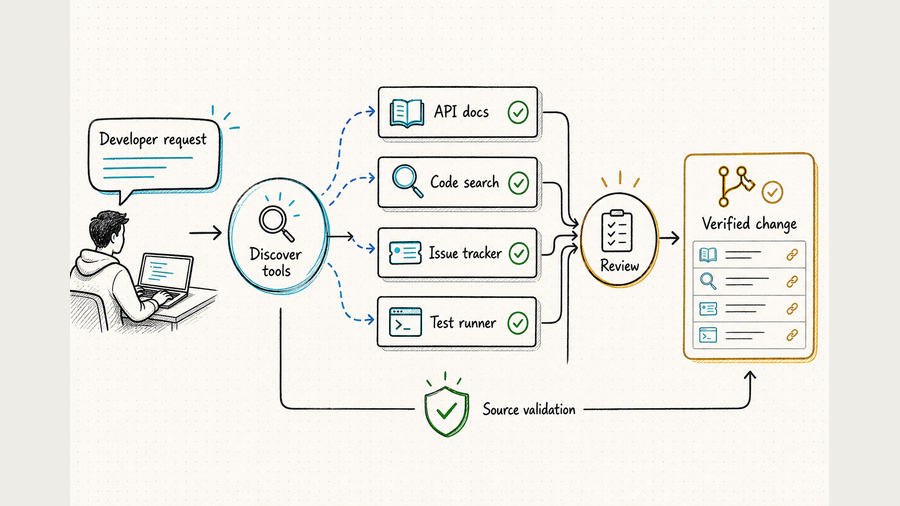
Developer Automation Agents Need Real Tool Access
AI coding agents can generate code, explain errors, and reason over local context. But useful developer automation workflows often require external capabilities: API reference lookup, documentation search, package research, monitoring lookup, issue context, web research, file parsing, status checks, notification routing, and structured handoff notes.
QVeris gives agents one capability layer for discovering, inspecting, and calling relevant developer tools without hardcoding every documentation source, API endpoint, monitoring system, or notification provider.
From Developer Task to Automation Runbook
How QVeris connects a developer task to an action plan through discoverable, inspectable capabilities.
Why Developer Automation Agents Are Hard to Build
Four core challenges that make developer automation agent development slow and fragile.
Developer Context Is Scattered
Code, API docs, tickets, logs, package information, monitoring systems, public references, and internal notes often live in different places — each requiring separate access paths.
Agents Need Schemas Before Taking Action
Before calling a developer capability, agents need to understand required inputs, response format, provider behavior, cost signals, and output limitations — not guess at runtime.
Hardcoded Tools Slow Iteration
Manually wiring every documentation source, API lookup, status check, or notification provider creates brittle wrappers and compounding maintenance overhead.
Automation Still Needs Review
Agent-generated debugging plans, issue triage notes, and implementation suggestions should be reviewed, tested, and validated by developers before being applied.
Classify Automation by Side Effect Before Choosing a Tool
“Developer automation” covers everything from reading documentation to deploying production code. Those actions must not share one permission envelope. The agent should know the exact repository, revision, environment, credential scope, and allowed side effects before it acts.
先按副作用划分自动化,再选择工具
“开发者自动化”既包括阅读文档,也可能包括部署生产代码,这些动作不能共享同一套权限。Agent 执行前必须明确仓库、版本、环境、凭据范围以及被允许产生的副作用。
How QVeris Powers Developer Automation Agents
Discover developer capabilities
The agent searches QVeris for relevant capabilities such as API lookup, documentation search, web research, package research, monitoring lookup, structured summaries, or notifications.
Inspect before calling
The agent inspects schema, required inputs, response format, cost signals, and provider information before execution — no blind calls to unknown tools.
Call and return action-ready output
The agent calls selected capabilities and turns returned outputs into debugging plans, issue triage summaries, implementation checklists, release notes, or handoff notes.
Developer Automation Recipes You Can Build with QVeris
Eight concrete developer automation recipes organized by workflow phase.
Example Structured Output from a Developer Automation Agent
Illustrative example of a triage summary generated through QVeris capabilities. Not data from a real repository or private issue.
This is an illustrative example. It does not represent real repository data, private issues, or customer engineering projects. No guaranteed fix is implied. Developers should review, test, and validate all changes before applying them.
Make the Pull Request the Unit of Accountability
A credible coding agent does not jump from an issue to a deployment. It leaves a reviewable chain from task interpretation through tests, risk notes, and the exact proposed diff.
Resolve the task before touching code
Identify repository and base revision, reproduce the problem, state assumptions, define what “done” means, and flag missing information that could change the implementation.
Choose the smallest defensible change
List the files and interfaces likely to change, preserve unrelated user work, establish rollback, and keep generated edits inside the approved workspace.
Test behavior, not code generation
Run the narrowest relevant tests first, then broader regression, lint, type, security, and build checks. Preserve commands, exit codes, failures, retries, and any skipped validation.
Hand off evidence with the diff
Summarize cause, change, test evidence, residual risk, migration or rollback steps, and external effects. The reviewer approves the current artifact—not a vague future action.
把 Pull Request 作为责任与审查的基本单元
可信的编码 Agent 不会从 Issue 直接跳到部署,而是留下从任务理解、测试证据、风险说明到精确 diff 的完整复核链。
改代码前先确认任务
识别仓库与基准版本,复现问题,说明假设,定义完成标准,并指出哪些缺失信息可能改变实现方案。
选择足以解决问题的最小变更
列出可能修改的文件和接口,保护无关的用户改动,预先确定回滚方式,并把生成编辑限制在批准工作区内。
验证行为,而不是“生成了代码”
先运行最相关的小范围测试,再执行回归、lint、类型、安全和构建检查;保留命令、退出码、失败、重试及任何跳过的验证。
让 diff 与证据一起交付
说明根因、改动、测试证据、剩余风险、迁移或回滚步骤以及外部影响。审查者批准的是当前制品,不是模糊的未来操作。
Designed for Developer Review and Testing
QVeris helps agents discover and call developer capabilities, but automation outputs still need developer review.
Before applying automation outputs
- Review generated debugging plans before applying changes to your codebase.
- Validate API assumptions against official documentation — not just agent output.
- Run tests before merging any code informed by agent suggestions.
- Avoid applying unverified changes to production systems or configurations.
- Treat agent output as a structured draft — not a guaranteed fix or final implementation.
Every High-Impact Action Needs a Typed Gate
Approval is strongest when it names exactly what may happen and automatically expires when the context changes. A general “go ahead” should never authorize a different repository, environment, command, or artifact.
Target identity
Repository, organization, branch, commit SHA, environment, service, package, and destination are resolved and displayed.
Change boundary
Allowed files and resources, command policy, network access, credentials, runtime, cost, and write scope are enforced outside the model.
Verification
Required tests and checks passed on the current diff; known failures, flaky tests, skipped checks, and dependency changes are visible.
Approval & rollback
A named reviewer sees the artifact and impact, and a tested rollback or recovery path exists before merge, publish, migration, or deploy.
Observability
Correlate request, repository and commit identity, selected capability, parameter summary, permissions, diff, commands, exit codes, test results, approvals, writes, cost, and rollback under one task ID. Redact secrets and sensitive source.
Evaluation
Test real repository tasks with hidden acceptance criteria. Measure issue understanding, file selection, functional correctness, regression safety, unrelated edits, security findings, reviewer effort, latency, and cost. Permission leaks or dangerous side effects fail the gate even when average accuracy is high.
每个高影响动作都需要明确类型的执行闸门
只有当批准明确说明允许发生什么,并在上下文变化时自动失效,它才真正可靠。笼统的“继续”绝不能授权另一个仓库、环境、命令或制品。
目标身份
仓库、组织、分支、commit SHA、环境、服务、软件包和目标位置均已解析并展示。
变更边界
允许的文件与资源、命令策略、网络访问、凭据、运行时间、成本与写入范围在模型外部强制执行。
验证证据
要求的测试与检查已针对当前 diff 通过;已知失败、不稳定测试、跳过项目和依赖变化清晰可见。
批准与回滚
指定审查者看到了制品和影响,并在合并、发布、迁移或部署前准备好经过验证的回滚或恢复路径。
可观测性
用同一任务 ID 关联请求、仓库与 commit、能力、参数摘要、权限、diff、命令、退出码、测试结果、批准、外部写入、成本和回滚,并对密钥与敏感源码脱敏。
评测
使用带隐藏验收标准的真实仓库任务,测量 Issue 理解、文件选择、功能正确性、回归安全、无关修改、安全发现、审查工作量、时延与成本。权限泄漏或危险副作用即使在平均准确率很高时也应直接阻断。
Manual Developer Workflows vs QVeris Capability Routing
| Requirement | Manual developer workflow | Hardcoded developer tools | QVeris for developer automation |
|---|---|---|---|
| Tool discovery | Developers manually search docs, issues, logs, and references | Fixed integrations are chosen in advance | ✓Agents can discover relevant developer capabilities based on the task |
| Workflow repeatability | Flexible but slow and inconsistent | Repeatable but limited to predefined integrations | ✓Reusable Discover, Inspect, Call pattern across developer capabilities |
| Schema understanding | No structured schema for agent workflows | Developers maintain provider-specific documentation | ✓Agents inspect schema, parameters, and cost signals before execution |
| Output structure | Often scattered notes, copied links, and ad hoc checklists | Structured only where integrations are designed | ✓Structured outputs can be routed into checklists, handoffs, issues, or workflows |
| Review and visibility | Hard to track what tools were used and when | Usage spread across provider dashboards | ✓Usage can be reviewed through QVeris usage history and credits ledger |
Who Uses Developer Automation Agents?
AI Coding Agent Builders
Developers building coding agents that need external tools, documentation, APIs, and structured task execution beyond local context.
Platform Engineering Teams
Teams automating internal developer workflows such as issue triage, docs lookup, debugging support, and workflow handoffs.
Startup Engineering Teams
Small teams that want faster research, debugging, and implementation loops without wiring every provider manually.
Developer Tool Builders
Teams building developer assistants, internal platforms, workflow bots, or agent-powered engineering products.
Continue Exploring QVeris
All Tools Directory
Browse the complete catalog of AI agent tools, platforms, and developer capabilities.
Best MCP Tools
Discover top MCP platforms for connecting agents to developer tools and services.
AI Agents for Web Research
Explore source discovery, public information lookup, and structured research briefs.
AI Agents for Document Processing
Explore PDF parsing, OCR, extraction, and document automation workflows.
Official provider references
Frequently Asked Questions
What are AI agents for developer automation?
How does QVeris help developer automation agents?
Can QVeris support issue triage workflows?
Is QVeris an IDE or coding assistant?
Do agents inspect developer tools before using them?
Can developer automation outputs be applied without review?
Do I need to hardcode every developer tool provider?
What can a developer automation agent build with QVeris?
Build Developer Automation Agents with Real Capabilities
Use QVeris to give AI agents access to developer capabilities for API lookup, documentation search, issue triage, debugging research, and workflow automation.
面向开发者自动化的 AI Agent
使用 QVeris 帮助 AI Agent 发现、检查并调用经过验证的开发者能力,用于 API 查询、文档搜索、Issue 分类、错误研究和工作流自动化。
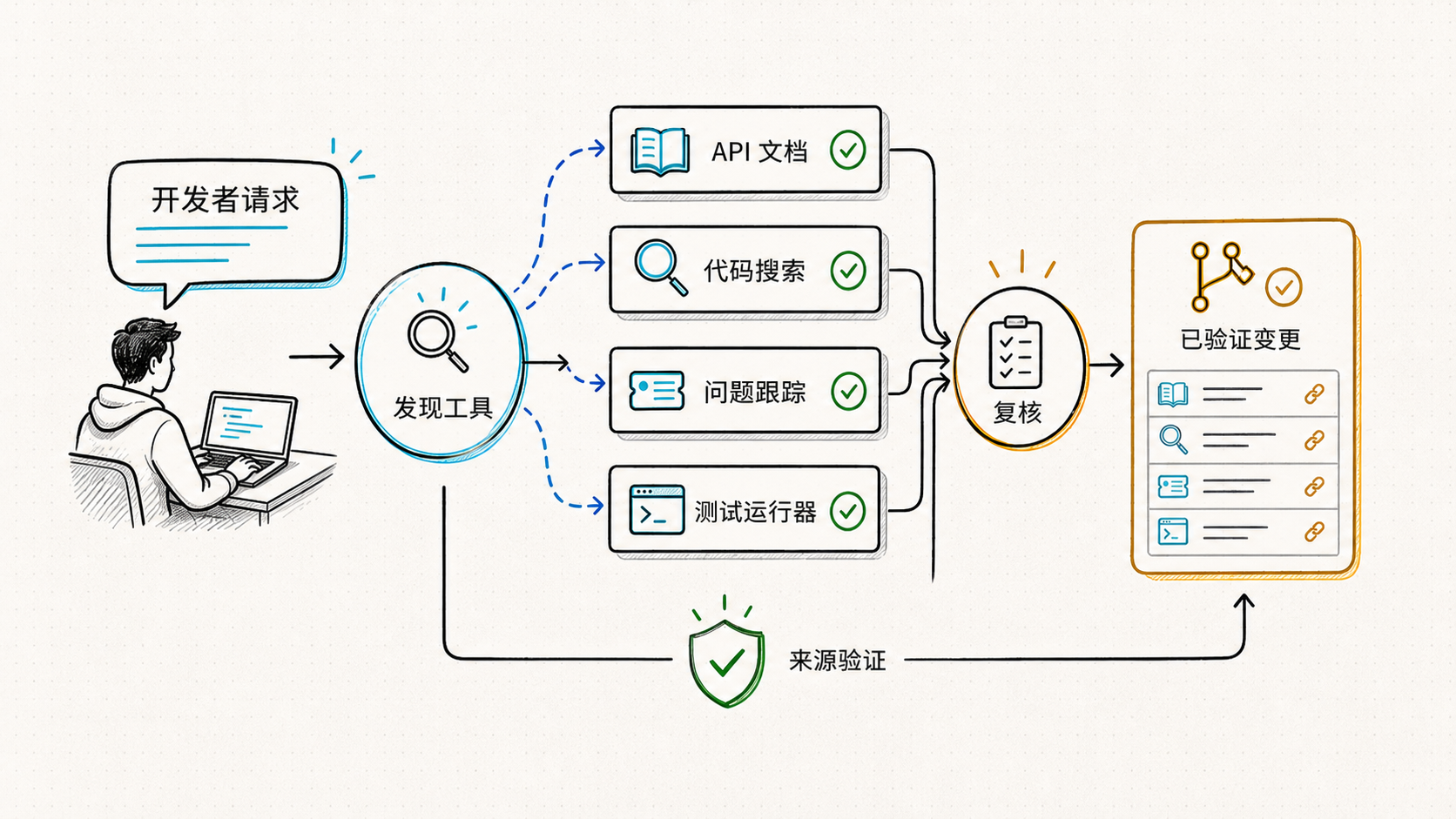
开发者自动化 Agent 需要真实的工具访问
AI 编程 Agent 可以生成代码、解释错误并对本地上下文进行推理。但有用的开发者自动化工作流通常需要外部能力:API 参考查询、文档搜索、软件包研究、监控查询、Issue 上下文、网页研究、文件解析、状态检查、通知路由和结构化交接记录。
QVeris 为 Agent 提供统一的能力层,用于发现、检查和调用相关开发者工具——无需硬编码每个文档源、API 端点、监控系统或通知提供商。
从开发者任务到自动化操作手册
QVeris 如何通过可发现、可检查的能力将开发者任务连接到行动方案。
为什么开发者自动化 Agent 很难构建
四个核心挑战使开发者自动化 Agent 的开发变得缓慢且脆弱。
开发者上下文分散
代码、API 文档、工单、日志、软件包信息、监控系统、公开参考资料和内部笔记通常存在于不同的地方——每个都需要单独的访问路径。
Agent 在行动前需要 Schema
在调用开发者能力之前,Agent 需要了解所需输入、响应格式、提供商行为、成本信号和输出限制——而不是在运行时猜测。
硬编码工具拖慢迭代
手动接入每个文档源、API 查询、状态检查或通知提供商会产生脆弱的封装代码和不断增加的维护负担。
自动化仍需审查
Agent 生成的调试计划、Issue 分类记录和实施建议应由开发者进行审查、测试和验证后才能应用。
Classify Automation by Side Effect Before Choosing a Tool
“Developer automation” covers everything from reading documentation to deploying production code. Those actions must not share one permission envelope. The agent should know the exact repository, revision, environment, credential scope, and allowed side effects before it acts.
先按副作用划分自动化,再选择工具
“开发者自动化”既包括阅读文档,也可能包括部署生产代码,这些动作不能共享同一套权限。Agent 执行前必须明确仓库、版本、环境、凭据范围以及被允许产生的副作用。
QVeris 如何驱动开发者自动化 Agent
发现合适的开发者能力
Agent 会在 QVeris 中查找与任务相关的能力,例如 API 查询、文档搜索、网页研究、软件包调研、监控信息查询、结构化总结或通知。
调用前先检查
执行前,Agent 会检查 Schema、必填参数、响应格式、成本信号和服务商信息,避免盲目调用不了解的工具。
调用能力并返回可执行的结果
Agent 调用选定能力,并将返回结果整理成调试方案、问题分诊摘要、实施清单、发布说明或交接记录。
使用 QVeris 可以构建的开发者自动化方案
八个按工作流阶段组织的具体开发者自动化方案。
开发者自动化 Agent 的结构化输出示例
通过 QVeris 能力生成的分类摘要示意图。非真实仓库或私有 Issue 的数据。
这是示意性示例。不代表真实仓库数据、私有 Issue 或客户工程项目。不暗示有保证的修复。开发者在应用更改前应审查、测试和验证所有内容。
Make the Pull Request the Unit of Accountability
A credible coding agent does not jump from an issue to a deployment. It leaves a reviewable chain from task interpretation through tests, risk notes, and the exact proposed diff.
Resolve the task before touching code
Identify repository and base revision, reproduce the problem, state assumptions, define what “done” means, and flag missing information that could change the implementation.
Choose the smallest defensible change
List the files and interfaces likely to change, preserve unrelated user work, establish rollback, and keep generated edits inside the approved workspace.
Test behavior, not code generation
Run the narrowest relevant tests first, then broader regression, lint, type, security, and build checks. Preserve commands, exit codes, failures, retries, and any skipped validation.
Hand off evidence with the diff
Summarize cause, change, test evidence, residual risk, migration or rollback steps, and external effects. The reviewer approves the current artifact—not a vague future action.
把 Pull Request 作为责任与审查的基本单元
可信的编码 Agent 不会从 Issue 直接跳到部署,而是留下从任务理解、测试证据、风险说明到精确 diff 的完整复核链。
改代码前先确认任务
识别仓库与基准版本,复现问题,说明假设,定义完成标准,并指出哪些缺失信息可能改变实现方案。
选择足以解决问题的最小变更
列出可能修改的文件和接口,保护无关的用户改动,预先确定回滚方式,并把生成编辑限制在批准工作区内。
验证行为,而不是“生成了代码”
先运行最相关的小范围测试,再执行回归、lint、类型、安全和构建检查;保留命令、退出码、失败、重试及任何跳过的验证。
让 diff 与证据一起交付
说明根因、改动、测试证据、剩余风险、迁移或回滚步骤以及外部影响。审查者批准的是当前制品,不是模糊的未来操作。
专为开发者审查和测试而设计
QVeris 帮助 Agent 发现和调用开发者能力,但自动化输出仍需开发者审查。
应用自动化输出之前
- 在将更改应用到代码库之前审查生成的调试计划。
- 对照官方文档验证 API 假设——而不仅仅是 Agent 输出。
- 在合并 Agent 建议生成的代码之前运行测试。
- 避免将未经验证的更改应用到生产系统或配置中。
- 将 Agent 输出视为结构化草稿——而非有保证的修复或最终实现。
Every High-Impact Action Needs a Typed Gate
Approval is strongest when it names exactly what may happen and automatically expires when the context changes. A general “go ahead” should never authorize a different repository, environment, command, or artifact.
Target identity
Repository, organization, branch, commit SHA, environment, service, package, and destination are resolved and displayed.
Change boundary
Allowed files and resources, command policy, network access, credentials, runtime, cost, and write scope are enforced outside the model.
Verification
Required tests and checks passed on the current diff; known failures, flaky tests, skipped checks, and dependency changes are visible.
Approval & rollback
A named reviewer sees the artifact and impact, and a tested rollback or recovery path exists before merge, publish, migration, or deploy.
Observability
Correlate request, repository and commit identity, selected capability, parameter summary, permissions, diff, commands, exit codes, test results, approvals, writes, cost, and rollback under one task ID. Redact secrets and sensitive source.
Evaluation
Test real repository tasks with hidden acceptance criteria. Measure issue understanding, file selection, functional correctness, regression safety, unrelated edits, security findings, reviewer effort, latency, and cost. Permission leaks or dangerous side effects fail the gate even when average accuracy is high.
每个高影响动作都需要明确类型的执行闸门
只有当批准明确说明允许发生什么,并在上下文变化时自动失效,它才真正可靠。笼统的“继续”绝不能授权另一个仓库、环境、命令或制品。
目标身份
仓库、组织、分支、commit SHA、环境、服务、软件包和目标位置均已解析并展示。
变更边界
允许的文件与资源、命令策略、网络访问、凭据、运行时间、成本与写入范围在模型外部强制执行。
验证证据
要求的测试与检查已针对当前 diff 通过;已知失败、不稳定测试、跳过项目和依赖变化清晰可见。
批准与回滚
指定审查者看到了制品和影响,并在合并、发布、迁移或部署前准备好经过验证的回滚或恢复路径。
可观测性
用同一任务 ID 关联请求、仓库与 commit、能力、参数摘要、权限、diff、命令、退出码、测试结果、批准、外部写入、成本和回滚,并对密钥与敏感源码脱敏。
评测
使用带隐藏验收标准的真实仓库任务,测量 Issue 理解、文件选择、功能正确性、回归安全、无关修改、安全发现、审查工作量、时延与成本。权限泄漏或危险副作用即使在平均准确率很高时也应直接阻断。
手动开发者工作流 vs QVeris 能力路由
| 需求 | 手动开发者工作流 | 硬编码开发者工具 | QVeris 用于开发者自动化 |
|---|---|---|---|
| 工具发现 | 开发者手动搜索文档、Issue、日志和参考资料 | 预先选择固定集成 | ✓Agent 可基于任务发现相关开发者能力 |
| 工作流可重复性 | 灵活但缓慢且不一致 | 可重复但受限于预定义集成 | ✓跨开发者能力复用发现、检查、调用模式 |
| Schema 理解 | Agent 工作流无结构化 Schema | 开发者维护提供商特定文档 | ✓Agent 在执行前检查 Schema、参数和成本信号 |
| 输出结构 | 通常为零散的笔记、复制链接和临时检查清单 | 仅在集成设计处有结构化输出 | ✓结构化输出可路由到检查清单、交接、Issue 或工作流 |
| 审查与可见性 | 难以追踪使用了哪些工具和何时使用 | 使用情况分散在提供商仪表盘中 | ✓可通过 QVeris 使用历史和 credits 账本查看使用情况 |
谁在使用开发者自动化 Agent?
AI 编程 Agent 构建者
正在构建需要外部工具、文档、API 和结构化任务执行(超越本地上下文)的编程 Agent 的开发者。
平台工程团队
正在自动化内部开发者工作流(如 Issue 分类、文档查询、调试支持和工作流交接)的团队。
初创工程团队
希望更快地研究、调试和实现,但不想手动接入每个提供商的小型团队。
开发者工具构建者
正在构建开发者助手、内部平台、工作流机器人或 Agent 驱动工程产品的团队。
继续探索 QVeris
官方 Provider 文档
常见问题
什么是面向开发者自动化的 AI Agent?
QVeris 如何帮助开发者自动化 Agent?
QVeris 能支持 Issue 分类工作流吗?
QVeris 是 IDE 或编程助手吗?
Agent 在使用开发者工具之前会检查它们吗?
开发者自动化输出可以在未经审查的情况下应用吗?
我需要硬编码每个开发者工具提供商吗?
开发者自动化 Agent 可以使用 QVeris 构建什么?
用真实能力构建开发者自动化 Agent
使用 QVeris 为 AI Agent 提供访问开发者能力的途径,用于 API 查询、文档搜索、Issue 分类、调试研究和工作流自动化。