
QVERIS GUIDE
Choose a Free Crypto Historical Data API
for Prices and OHLCV
Compare crypto history APIs for coverage, candles, limits, provenance, and reliable backfill workflows.
Free crypto historical data API: quick answer
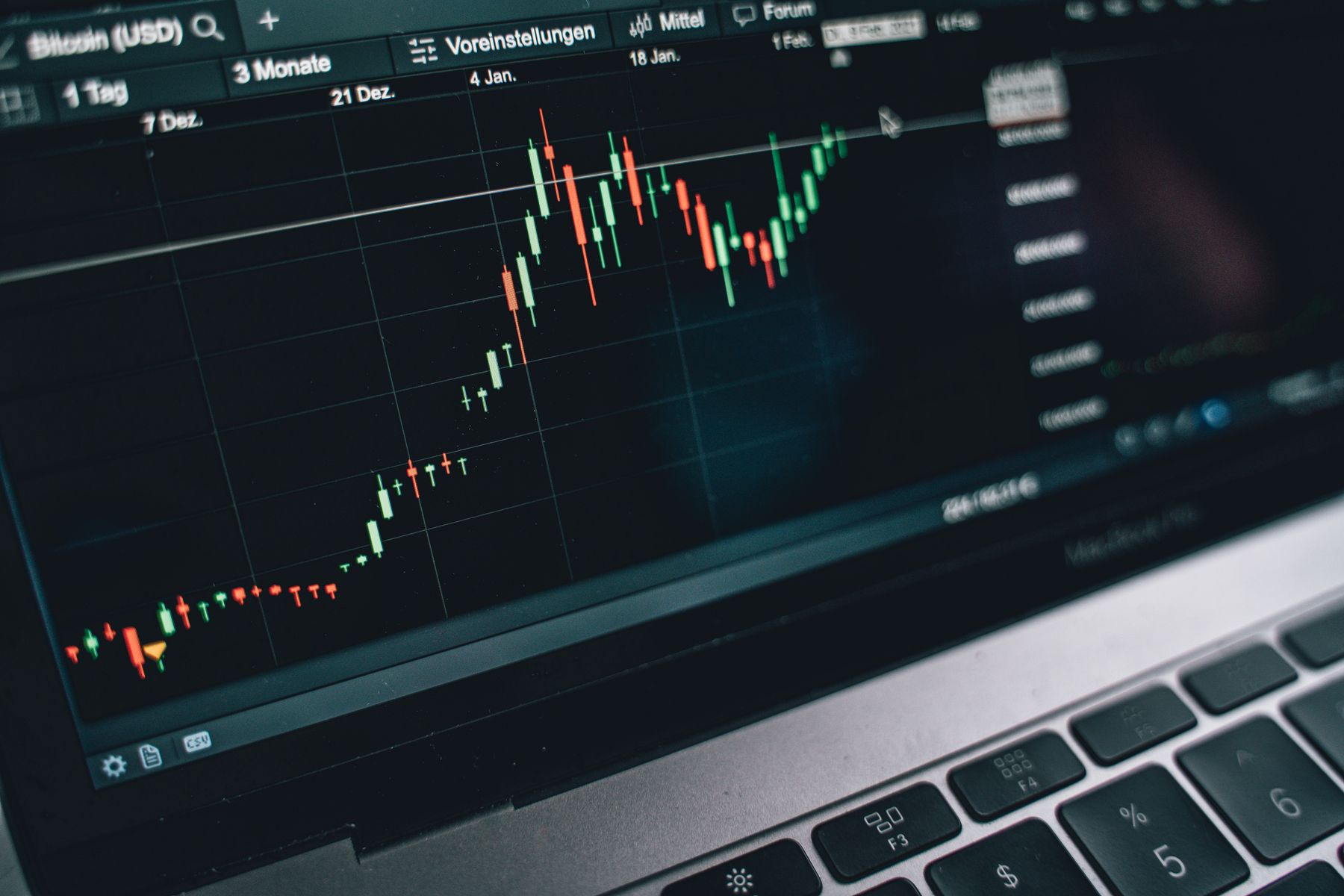
Timestamped open, high, low, close, and volume candles for a symbol, interval, and time range.
Free tiers differ in API keys, rate limits, historical depth, asset coverage, granularity, and commercial-use terms.
Check whether candles represent an exchange pair, an aggregate, or on-chain liquidity—and whether volume units are base or quote currency.
Choose the source that matches your market, interval, history, and refresh needs; normalize before charting or backtesting.
What a crypto historical data API can return
“Crypto historical data” can mean a daily coin price, exchange-specific OHLCV candles, an aggregated reference price, market-cap history, or on-chain metrics. These outputs are not interchangeable. Define the dataset before comparing free APIs so a convenient endpoint does not silently change the question you are trying to answer.
Historical crypto prices
A price-history endpoint commonly returns timestamp and price pairs for a coin ID such as bitcoin, a quote currency such as USD, and a date range or number of days. This format is compact and useful for charts, returns, correlations, and portfolio reporting. Check whether the price is a provider aggregate, an index, or a specific exchange market.
Crypto OHLCV and candle data
Candles add open, high, low, close, and volume for each interval. They are better suited to technical indicators and backtesting, but require an exact market definition: BTC/USD or BTC/USDT, venue, spot or derivative, interval boundary, volume unit, and whether the current candle is final.
Market cap, volume, and supply history
Some market-data APIs return price, market capitalization, and 24-hour volume in parallel arrays. These are useful for market reports but should not be confused with the traded volume inside one exchange candle. Supply fields may also differ by circulating, total, or maximum supply methodology.
On-chain crypto history is a separate dataset
Block height, transaction count, fees, hashrate, difficulty, UTXO statistics, and address activity come from blockchain or on-chain analytics sources. They may explain network conditions, but they do not replace market price candles. Keep market and network datasets separately identified when joining them by time.
If your requirement is narrower, use the dedicated QVeris guides for a free crypto OHLCV API, a free live crypto data API, or a free Bitcoin historical data API. Keeping those intents separate prevents a broad historical-data page from competing with specialist pages.
| Dataset | Typical fields | Best suited to | Key ambiguity |
|---|---|---|---|
| Price history | timestamp, price | Charts, returns, reporting | Aggregate or venue price |
| OHLCV | time, open, high, low, close, volume | Indicators and backtests | Market, boundary, volume unit |
| Market history | price, market cap, 24h volume | Market research | Provider methodology |
| On-chain history | blocks, fees, hashrate, UTXO | Network analysis | Indexing and metric definition |
What developers need from a crypto historical price API
Build a point-in-time crypto asset universe
This page targets multi-asset history rather than one Bitcoin series or candle mechanics. Historical research must know which assets existed and were investable on each date. Stable internal IDs should survive ticker reuse, token renames, chain migrations, contract swaps, redenominations, mergers, and delistings. Selecting today’s surviving top coins and fetching their past prices creates survivorship bias before the backtest begins.
A symbol is not a durable asset identifier. Store provider ID, network, contract address, migration lineage, active dates, and quote market. The same ticker can identify unrelated tokens, while one project can have several contracts or wrapped representations.
Worked survivorship example: a missing failure can reverse the result
Assume an equal-weight portfolio legitimately contained assets A, B, and C at the start of a historical period. A returned +20%, B returned +10%, and C later lost all tradable value after liquidity disappeared and its markets were delisted. The point-in-time portfolio return is (20% + 10% − 100%) ÷ 3 = −23.3%. If a researcher begins with today’s surviving asset list, C is absent and the same period appears to return (20% + 10%) ÷ 2 = +15%. Dropping one failed asset has changed a losing result into a profitable one.
Keep C in the historical universe through its real eligibility dates and apply a documented terminal-value policy using the last executable market, recovery value, migration consideration, or zero only when the evidence supports it. Distinguish a delisting from a token contract migration: a migration may require linking old and new contracts with a conversion ratio, while an unsupported or illiquid market may require ending eligibility without declaring the economic asset worthless. Store the venue, pair, last usable quote, liquidity evidence, inactive reason, and decision version so the terminal return can be audited.
Historical datasets needed for a multi-asset study
Maps stable IDs to symbols, names, networks, contracts, launch dates, migration events, and inactive dates. It is the foundation for every historical join.
Records which exchanges and pairs were active on each date, including markets that later closed or delisted the asset.
Tracks circulating supply, unlocks, burns, redenominations, token merges, and contract swaps so returns and market-cap history are interpretable.
Freezes provider methodology and repaired values for a reproducible research run instead of silently inheriting future data revisions.
Understand the candle before comparing prices
- Time boundary: determine whether the timestamp marks candle open or close and whether intervals align to UTC.
- Price basis: distinguish exchange trades, volume-weighted aggregates, index prices, mark prices, and DEX swap prices.
- Volume basis: identify base-asset volume, quote-currency volume, trade count, or provider-calculated volume.
- Incomplete candles: decide whether to exclude the current still-forming candle from indicators and backtests.
Compare crypto history APIs by point-in-time universe integrity
| Decision | Check | Why it matters |
|---|---|---|
| Asset identity | Stable ID, network, contract, symbol history, migration links | Symbols are reused and one project can span contracts. |
| Inactive assets | Delisted tokens, closed markets, dead contracts, inactive dates | Excluding failures creates survivorship-biased returns. |
| Universe snapshots | Members and rank inputs available for every rebalance date | Today’s ranking cannot define a historical portfolio. |
| Lifecycle events | Launch, migration, redenomination, merge, burn, unlock | Unadjusted events can appear as extreme returns. |
| Quote consistency | USD, stablecoin, BTC quote, FX conversion path | Nominally similar quotes can diverge under stress. |
| Revisions | Backfills, provider methodology changes, versioned snapshots | A result must remain reproducible after provider repairs. |
| Bulk economics | Assets × dates × markets × fields, export and storage rights | A multi-asset history can exceed free limits quickly. |
Choose the history layer before the provider
Use it to resolve identity and lifecycle across symbols, networks, contracts, wrappers, migrations, and inactive dates before joining any prices.
Provides exchange listings, pair active periods, quote currencies, venue status, and delisting history for historical eligibility tests.
Supports consistent daily or intraday observations across a defined universe. Verify missing-value policy and whether inactive assets remain queryable.
Adds unlocks, burns, migrations, redenominations, forks, and supply changes needed to interpret market cap and apparent returns.
A practical free-tier selection checklist
Define eligibility from information available on each rebalance date, including active market, liquidity, age, and excluded asset types.
Query known delistings, ticker collisions, contract swaps, and zero-liquidity periods. A successful request for BTC proves almost nothing about universe integrity.
Store the asset-master snapshot, mapping rules, lifecycle events, and any return adjustment used by the research run.
Estimate API calls and rows across all assets and dates, then verify bulk export, caching, research, and derived-data permissions.
How to get crypto historical data with an API in Python
A provider-neutral request and validation workflow
Before writing client code, record a small data contract: coin or pair identifier, quote currency, venue if applicable, price or OHLCV output, interval, inclusive start and exclusive end, timezone, maximum acceptable staleness, and required provenance fields. This makes it possible to compare providers against the same requirement.
import requests
import pandas as pd

params = {"symbol": "BTC-USD", "interval": "1h",
          "start": "2026-07-01", "end": "2026-07-07"}
rows = requests.get(API_URL, params=params, timeout=20).json()

df = pd.DataFrame(rows)
df["timestamp"] = pd.to_datetime(df["timestamp"], utc=True)
df = df.sort_values("timestamp").drop_duplicates("timestamp")
assert {"open", "high", "low", "close", "volume"} <= set(df.columns)Confirm whether it expects a coin ID, exchange symbol, base/quote pair, contract address, or pool address.
Use explicit UTC boundaries and a supported interval; paginate without overlapping or skipping candles.
Rename fields, parse timestamps, sort, deduplicate, inspect gaps, and record the provider and market provenance.
Pagination, rate limits, and retry safety
Historical endpoints often cap the number of candles returned per call. Advance the next request from the last confirmed timestamp, use the provider’s documented inclusive or exclusive boundary, and deduplicate after concatenation. For 429 and temporary 5xx responses, respect Retry-After, apply bounded exponential backoff, and never retry invalid parameters indefinitely.
Store the raw response before transforming it. Keep request parameters, retrieval time, final URL or endpoint version, response headers relevant to limits, and a checksum or immutable raw file. When a provider revises historical candles, this record lets you reproduce why a chart or backtest changed.
Quality checks before charting or backtesting
| Check | Expected rule | Typical failure |
|---|---|---|
| Price bounds | low ≤ open/close ≤ high | Malformed fields or inconsistent adjustment |
| Interval continuity | Timestamp difference equals the requested interval | Maintenance, illiquidity, or pagination gaps |
| Uniqueness | One row per market and candle-open time | Inclusive pagination duplicates |
| Completeness | No null OHLC; volume rule documented | Empty candles encoded as zero or null |
| Final candle | Closed before indicator or backtest use | Look-ahead or changing values |
Backtest warning: OHLCV bars do not contain tick order inside the candle. If both a stop and target fall within the same bar, bar data alone cannot prove which executed first. Use conservative execution rules or finer-grained data.
How QVeris helps find a free crypto historical data API
QVeris helps agents and developers discover and inspect callable capabilities. Open the free crypto historical data tools page to compare relevant market-data capabilities, review their inputs and outputs, and connect the selected tool through the documented QVeris workflow.
QVeris does not make a provider’s free tier unlimited or guarantee data quality. Verify the underlying source, limits, licensing, and candle semantics before production use.
Free crypto historical data API FAQ
It summarizes a market’s open, high, low, close, and traded volume for each candle interval.
Yes. Some public endpoints and free tiers return historical prices or candles, but history, rate limits, stability, attribution, and usage terms vary.
Call a historical endpoint with a coin ID or trading pair, quote currency, date range, and interval, then validate the returned timestamps and price basis.
Not always. Some public endpoints are keyless, while other free tiers require a key for quota tracking. Check authentication and usage terms before integrating.
Many APIs return JSON. Some also provide CSV, while JSON responses can be normalized and exported to CSV after validation.
Yes when the history, granularity, license, and quality fit your test. Inspect gaps, survivorship, market changes, and look-ahead bias.
Call a supported price or candle endpoint with the BTC identifier, interval, and time range; parse JSON into a dataframe and validate timestamps and fields.
No. Exchange candles represent trades on one venue, while aggregated candles combine or derive prices under a provider-specific methodology.
Usually no. Preserve the gap first. If your model requires a regular index, document any forward-fill or zero-volume synthetic candle explicitly.
REST is convenient for history and recovery; WebSocket is useful for live updates. Production systems commonly use both.
It depends on the source, interval, and plan. Check the earliest timestamp, maximum window per call, pagination, and whether older or intraday data requires an upgraded tier.
No. APIs may use different exchanges, aggregates, candle boundaries, quote currencies, outlier rules, and revision policies, so matching timestamps can still have different values.