
QVERIS GUIDE
Choose a Free Crypto OHLCV API
for Candles and Backtests
Compare free OHLCV APIs by assets, intervals, history, limits, provenance, and normalization needs.
Free crypto OHLCV API: quick answer
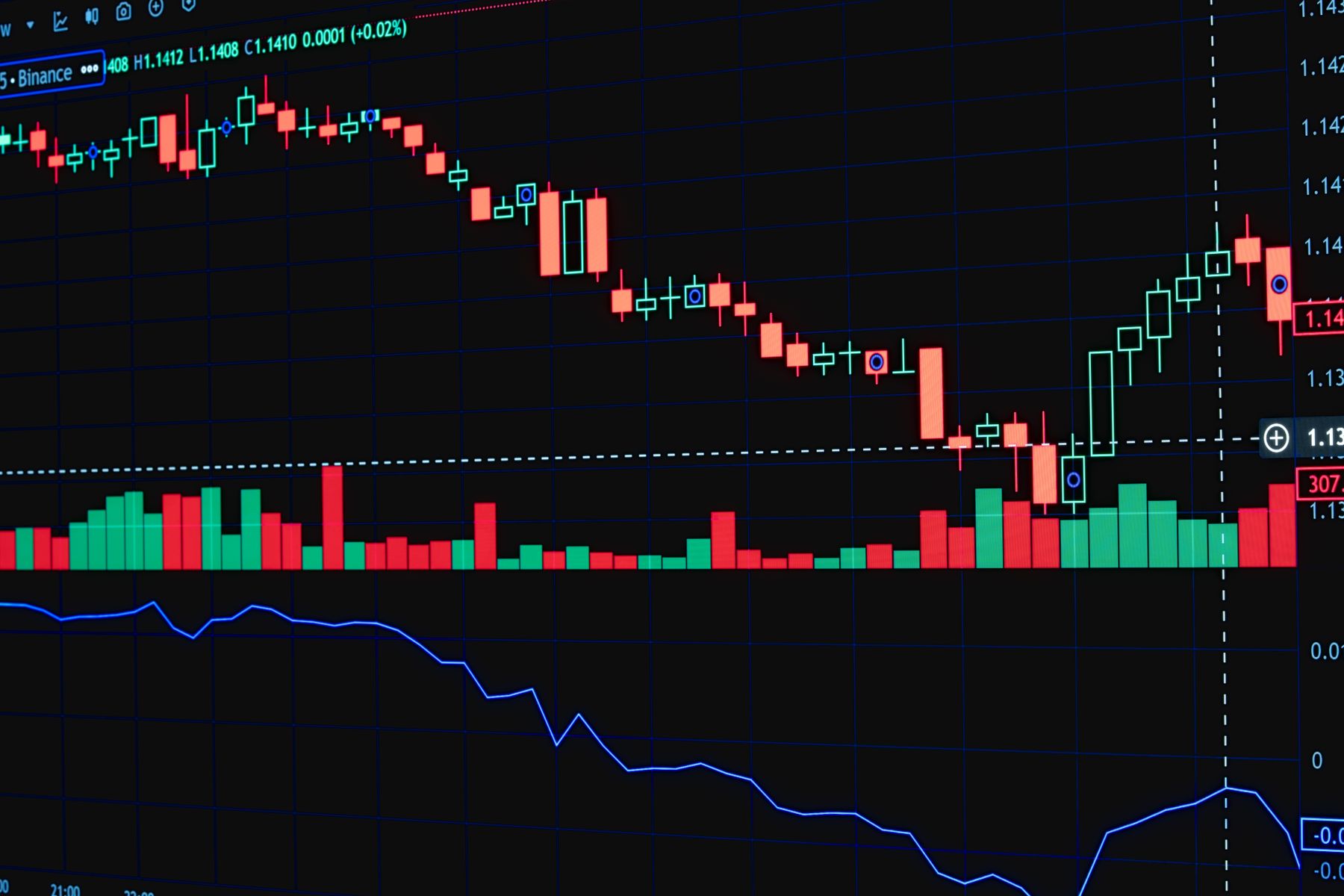
Timestamped open, high, low, close, and volume candles for a symbol, interval, and time range.
Free tiers differ in API keys, rate limits, historical depth, asset coverage, granularity, and commercial-use terms.
Check whether candles represent an exchange pair, an aggregate, or on-chain liquidity—and whether volume units are base or quote currency.
Choose the source that matches your market, interval, history, and refresh needs; normalize before charting or backtesting.
What developers need from a cryptocurrency candle data API
Treat candle construction as the primary data contract
This page is for charting, indicators, and backtests that consume open, high, low, close, and volume. The provider must define whether candles are built from trades, quotes, an index, or a derivative mark; whether the timestamp marks interval open or close; which timezone anchors boundaries; and whether the final still-forming candle is included. Two APIs can use the same symbol and interval yet produce different, internally valid bars.
Validate OHLCV invariants before strategy results. For a completed candle, high should be at least open and close, low should be no greater than them, volume should be non-negative, and timestamps should advance exactly one interval unless a documented no-trade rule applies.
Three candle-construction models
Aggregate executed trades from one market. Confirm trade corrections, late trades, zero-trade intervals, base volume, quote volume, and whether bars can be revised.
Combine several venues or an index. Review contributor weights, outlier removal, venue outages, rebalance rules, and how volume is aggregated.
Build bars from swaps in one pool. Token decimals, price direction, pool migrations, fee tiers, low liquidity, and chain reorgs affect results.
Create candles from a retained trade stream when provider bars do not match the strategy boundary. Version the aggregation code and raw trade snapshot.
Understand the candle before comparing prices
- Time boundary: determine whether the timestamp marks candle open or close and whether intervals align to UTC.
- Price basis: distinguish exchange trades, volume-weighted aggregates, index prices, mark prices, and DEX swap prices.
- Volume basis: identify base-asset volume, quote-currency volume, trade count, or provider-calculated volume.
- Incomplete candles: decide whether to exclude the current still-forming candle from indicators and backtests.
Suppose one venue's BTC/USD hourly candle closes at $60,000 after 100 BTC of trades, so quote notional is about $6 million. A second source reports BTC/USDT at 60,120 with 140 BTC of base volume, while an aggregate index closes at 60,050 and publishes no trade volume. These are three valid but different observations. Converting the 140 BTC volume to “USD volume” by multiplying by 60,120 silently assumes one USDT equals one U.S. dollar and uses the closing price rather than each trade price. Store venue, instrument ID, base and quote assets, product type, candle method, base volume, quote notional, contributor set, and conversion rule before comparing or merging bars.
Keep USDT, USDC, USD and other quote currencies distinct. If analysis needs one currency, apply a timestamped FX or stablecoin conversion and preserve the unconverted source bar.
A provider may omit a no-trade interval, emit OHLC equal to the prior close with zero volume, or return a gap during an outage. Normalize these as different states; never manufacture liquidity.
Track listing, suspension, delisting, symbol reuse, contract migration, pool migration, and exchange history by stable instrument ID and effective time rather than joining on display symbols alone.
How to compare free cryptocurrency OHLCV data APIs
| Decision | Check | Why it matters |
|---|---|---|
| Market coverage | Exchange pair, aggregate, or DEX pool | The same symbol can represent different markets. |
| Granularity | 1m, 5m, 1h, 1d and custom intervals | Free plans may restrict intraday candles. |
| Historical depth | Earliest candle, per-request window, pagination | A long backtest may need many calls or a paid tier. |
| Limits and terms | Key, requests, attribution, caching, commercial use | “Free” does not always permit production use. |
| Freshness | Current candle delay, cache duration, finalization time | A chart can tolerate more delay than an alerting system. |
| Data quality | Gaps, duplicates, corrections, status page, provenance | Backtests can silently change when data is repaired. |
| Delivery | REST, WebSocket, CSV, bulk download | Historical loading and live updates need different paths. |
A practical free-tier selection checklist
Record asset, quote currency, venue, spot or derivative, interval, earliest date, acceptable delay, and expected daily request count.
Request a liquid pair and a thinly traded pair. Test maximum rows, pagination boundaries, missing periods, response headers, and rate-limit behavior.
Check commercial use, attribution, retention, redistribution, derived-data, and display requirements instead of assuming public access means unrestricted use.
Store provider, endpoint, market, request time, interval, timezone, schema version, and ingestion status with each dataset.
How to get historical crypto OHLCV data in Python
A provider-neutral request and validation workflow
import requests
import pandas as pd

params = {"symbol": "BTC-USD", "interval": "1h",
          "start": "2026-07-01", "end": "2026-07-07"}
rows = requests.get(API_URL, params=params, timeout=20).json()

df = pd.DataFrame(rows)
df["timestamp"] = pd.to_datetime(df["timestamp"], utc=True)
df = df.sort_values("timestamp").drop_duplicates("timestamp")
assert {"open", "high", "low", "close", "volume"} <= set(df.columns)Confirm whether it expects a coin ID, exchange symbol, base/quote pair, contract address, or pool address.
Use explicit UTC boundaries and a supported interval; paginate without overlapping or skipping candles.
Rename fields, parse timestamps, sort, deduplicate, inspect gaps, and record the provider and market provenance.
Pagination, rate limits, and retry safety
Historical endpoints often cap the number of candles returned per call. Advance the next request from the last confirmed timestamp, use the provider’s documented inclusive or exclusive boundary, and deduplicate after concatenation. For 429 and temporary 5xx responses, respect Retry-After, apply bounded exponential backoff, and never retry invalid parameters indefinitely.
Quality checks before charting or backtesting
| Check | Expected rule | Typical failure |
|---|---|---|
| Price bounds | low ≤ open/close ≤ high | Malformed fields or inconsistent adjustment |
| Interval continuity | Timestamp difference equals the requested interval | Maintenance, illiquidity, or pagination gaps |
| Uniqueness | One row per market and candle-open time | Inclusive pagination duplicates |
| Completeness | No null OHLC; volume rule documented | Empty candles encoded as zero or null |
| Final candle | Closed before indicator or backtest use | Look-ahead or changing values |
Backtest warning: OHLCV bars do not contain tick order inside the candle. If both a stop and target fall within the same bar, bar data alone cannot prove which executed first. Use conservative execution rules or finer-grained data.
How QVeris helps find a free crypto OHLCV API
QVeris helps agents and developers discover and inspect callable capabilities. Open the Get Kline/Candlestick Data tool details to review this Binance tool’s inputs and outputs, then connect it through the documented QVeris workflow.
QVeris does not make a provider’s free tier unlimited or guarantee data quality. Verify the underlying source, limits, licensing, and candle semantics before production use.
Free crypto OHLCV API FAQ
It summarizes a market’s open, high, low, close, and traded volume for each candle interval.
Some public endpoints are keyless, but coverage, history, rate limits, stability, and usage terms still vary.
Exchange APIs and market-data providers both do. Choose based on whether you need venue-specific or aggregated candles.
Yes when the history, granularity, license, and quality fit your test. Inspect gaps, survivorship, market changes, and look-ahead bias.
Call a supported candle endpoint with the BTC pair, interval, and time range; parse JSON into a dataframe and validate timestamps and fields.
No. Exchange candles represent trades on one venue, while aggregated candles combine or derive prices under a provider-specific methodology.
Usually no. Preserve the gap first. If your model requires a regular index, document any forward-fill or zero-volume synthetic candle explicitly.
REST is convenient for history and recovery; WebSocket is useful for live updates. Production systems commonly use both.