QVeris
运行任务
Grok API GuideGrok API 指南

Best APIs to Use with Grok for AI Workflows最适合 Grok AI 工作流的 API

Compare practical APIs for Grok workflows by data fit, freshness, permissions, latency, and production controls.

从数据匹配度、时效、权限、延迟和生产控制等方面,对比适合 Grok 工作流的实用 API。

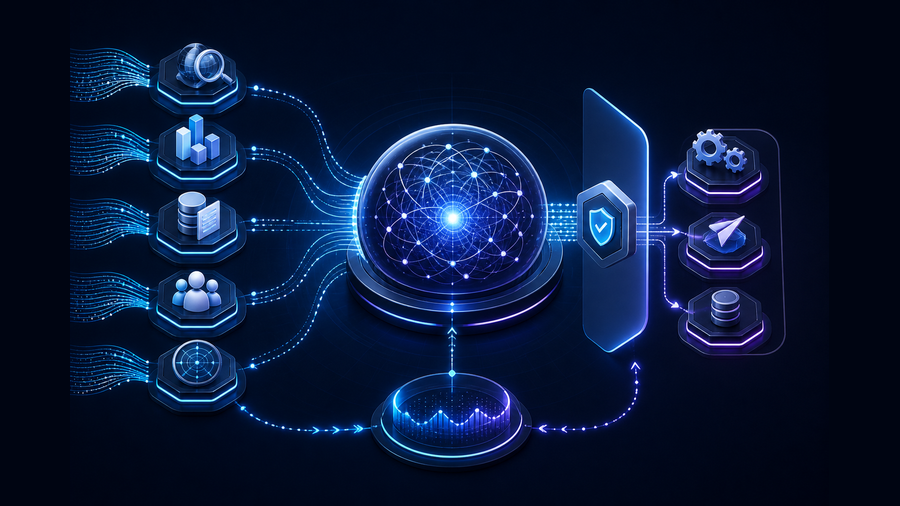
Grok reasoning core connected to research, data, knowledge, action, approval, and monitoring API layers
Short answer简短结论

For most Grok workflows, start with one live-research source, one system-of-record API, one action channel, and observability. xAI already documents server-side tools for web/X search, code execution, collections search, and remote MCP; add third-party APIs only when they provide authoritative private data or an action the native tools do not own.大多数 Grok 工作流应从四类能力起步:一个实时研究来源、一个业务事实源、一个动作通道,以及可观测性。xAI 已提供 Web/X 搜索、代码执行、Collections 搜索与远程 MCP 等服务端工具;只有在需要权威私有数据或原生工具不负责的业务动作时,才接入第三方 API。

Scope boundary范围边界

Use Grok's native tools before duplicating them先用 Grok 原生工具,避免重复建设

A useful API shortlist starts by separating capabilities xAI executes from calls your application must own.一份实用的 API 候选清单,首先要区分由 xAI 执行的能力与必须由应用负责的调用。

Built-in, server-side tools服务端内置工具

xAI documents web search, X search, code execution, image generation, and Collections search as built-in tools. The API executes these tools and can return citations for gathered information. Choose them when the source and execution model already match the task.xAI 将 Web 搜索、X 搜索、代码执行、图片生成和 Collections 搜索列为内置工具。API 会执行这些工具,并可为检索信息返回引用。当来源与执行方式已经满足任务时,应优先采用。

Review xAI's tools overview查看 xAI 工具总览

Application-owned functions and APIs应用负责的函数与 API

With function calling, Grok requests a named function with JSON arguments; your code validates the request, executes the external API, and returns the result. This is the right boundary for CRM records, databases, ticketing, messaging, payments, or any write that needs application authorization.使用 Function Calling 时,Grok 会请求一个带 JSON 参数的具名函数;你的代码负责校验、执行外部 API 并回传结果。CRM、数据库、工单、消息、支付,以及任何需要应用授权的写操作,都应位于这条边界内。

Read the official function-calling flow阅读官方 Function Calling 流程

Decision matrix决策矩阵

Choose an API by the missing capability按缺失能力选择 API

The strongest stack assigns one clear job to each integration. These are representative candidates, not claims that every workflow needs every vendor.可靠的技术栈会为每个集成分配一个明确职责。以下是代表性候选,并不意味着所有工作流都要接入全部厂商。

Capability能力Good starting API优先候选 APIUse it when适用场景Primary control首要控制
Native live research原生实时研究xAI Agent Tools START HEREWeb/X evidence and code execution belong inside the Grok request.Web/X 证据和代码执行应在 Grok 请求内完成。Allowed sources and citations限定来源并保留引用
Specialized web retrieval专业 Web 检索Tavily / ExaYou need a dedicated search contract, filters, or reusable retrieval outside xAI.需要独立搜索契约、过滤条件,或在 xAI 之外复用检索。Freshness, provenance, domain allowlist时效、出处、域名白名单
Operational records业务事实记录GitHub REST / NotionGrok must reason over issues, pull requests, runbooks, or structured workspaces.Grok 需要分析 Issue、PR、运行手册或结构化工作区。Read-only scopes first优先只读权限
Private retrieval私有知识检索Pinecone / Supabase VectorCollections are not the chosen knowledge store or row-level policy must remain local.未采用 Collections,或行级权限必须留在自有系统内。Tenant isolation and citation IDs租户隔离与引用 ID
Team action团队动作Slack / GmailA reviewed result must become a draft, alert, or message.审核后的结果需要转成草稿、告警或消息。Preview, approval, idempotency预览、审批、幂等
Observability可观测性OpenTelemetry / SentryYou need traces across model, tool, retry, approval, and outcome.需要串联模型、工具、重试、审批和结果的追踪。Redaction and correlation IDs脱敏与关联 ID
Selection framework选择框架

Six tests for the best API to use with Grok判断 API 是否适合 Grok 的六项测试

Vendor popularity is a weak proxy for agent readiness. Evaluate the actual endpoint and response contract Grok will use.厂商知名度不能代表 Agent 就绪度。应评估 Grok 实际调用的端点与响应契约。

01 · AUTHORITY

Is it the source of truth?是否为事实源?

Prefer the system that owns the record over a copied index. A CRM is authoritative for account state; a search API is not.优先调用记录的归属系统,而不是复制索引。CRM 可作为客户状态的事实源,搜索 API 不可以。

02 · CONTRACT

Is the schema narrow?Schema 是否足够窄?

Stable IDs, enums, pagination, timestamps, and typed errors reduce ambiguity. Endpoints that return arbitrary prose create extra parsing risk.稳定 ID、枚举、分页、时间戳和类型化错误可减少歧义;返回任意长文本的端点会增加解析风险。

03 · CONTROL

Can access be scoped?权限能否收窄?

Look for separate read/write scopes, tenant boundaries, service credentials, expiry, and audit events. Avoid integrations that require an all-powerful personal token.检查读写分离、租户边界、服务凭据、有效期与审计事件;避免必须使用全权限个人 Token 的集成。

04 · RECOVERY

Can unknown states be reconciled?未知状态能否核对?

For writes, require idempotency or a queryable request ID. A timeout must not force Grok to guess whether an action succeeded.写操作应支持幂等或可查询的请求 ID。超时后不能让 Grok 猜测操作是否成功。

05 · EVIDENCE

Can results be cited?结果能否引用?

Useful results retain record IDs, URLs, update times, and source labels so a reviewer can reopen the evidence behind the answer.可用结果应保留记录 ID、URL、更新时间与来源标签,使审核者能够重新打开答案背后的证据。

06 · OPERATIONS

Can it be observed and budgeted?能否观测与控制预算?

Measure call count, latency, rate-limit behavior, retries, payload size, and accepted-output cost—not only the provider's headline price.应测量调用次数、延迟、限流表现、重试、Payload 大小与被采纳结果的成本,而不只看厂商标价。

Implementation pattern实施模式

Design the Grok-facing contract, not a raw API proxy为 Grok 设计工具契约,而不是裸 API 代理

Do not expose a vendor's entire REST surface as one generic tool. Wrap the smallest business capability Grok needs, validate it in deterministic code, and return a compact result.不要把厂商完整 REST 接口包装成一个通用工具。只暴露 Grok 所需的最小业务能力,在确定性代码中校验,并返回精简结果。

{ "name": "get_customer_case", "description": "Read one support case by ID; never update or close it", "parameters": { "type": "object", "properties": { "case_id": { "type": "string", "pattern": "^CASE-[0-9]+$" }, "include_events": { "type": "boolean", "default": false } }, "required": ["case_id"], "additionalProperties": false } }

What the wrapper must do包装层必须完成什么

  • Resolve the actual user, tenant, and allowed case scope before calling the provider.调用服务商前,解析真实用户、租户与允许访问的工单范围。
  • Reject invented fields and normalize provider-specific errors into stable categories.拒绝虚构字段,并将服务商错误归一为稳定类别。
  • Return only fields required for the decision, plus source ID and update time.仅返回决策所需字段,并附来源 ID 与更新时间。
  • Keep the raw credential, full payload, and sensitive logs outside model context.原始凭据、完整 Payload 与敏感日志不得进入模型上下文。

If the same capability should work across compatible AI clients, expose the wrapper through a remote MCP server. xAI documents remote MCP as a tool option; the server must still enforce its own authorization. QVeris can help teams inspect available model-facing tools before committing to a provider-specific wrapper.若同一能力需要在兼容的 AI 客户端之间复用,可通过远程 MCP Server 暴露该包装层。xAI 将远程 MCP 列为工具选项,但服务器仍必须自行执行授权。团队也可先通过 QVeris 检查可用的模型工具,再决定是否建设厂商专用包装层。

Recommended stack shapes推荐组合形态

Three useful Grok stacks—not ten interchangeable tools三套实用 Grok 组合,而非十个同质工具

01 · RESEARCH

Signal-to-brief从信号到简报

Use xAI web/X search for current evidence, an internal knowledge source for policy context, and Slack for an approved briefing. Keep every source URL in the output.用 xAI Web/X 搜索获取最新证据,以内部知识源补充政策背景,再把获批简报发送到 Slack;输出中保留全部来源 URL。

02 · ENGINEERING

Issue-to-draft fix从 Issue 到修复草稿

Read GitHub issues and checks, retrieve the relevant runbook, let Grok propose a patch, then create only a draft artifact after tests and human review.读取 GitHub Issue 与检查结果,检索相关运行手册,由 Grok 提出补丁;测试并人工审核后,只创建草稿产物。

03 · OPERATIONS

Case triage with evidence基于证据的工单分诊

Fetch a case by ID, query authoritative customer data, classify the next step, and prepare a response draft. Escalate missing consent, conflicting records, and irreversible actions.按 ID 获取工单,查询权威客户数据,判断下一步并准备回复草稿;缺少同意、记录冲突或不可逆操作一律升级处理。

Architecture pattern架构模式

Keep Grok inside a bounded tool loop让 Grok 在有边界的工具循环内运行

xAI supports function calling and remote MCP, but the model should decide intent—not authorization. Put policy enforcement in deterministic code around the tool.xAI 支持函数调用和远程 MCP,但模型只应判断意图,不应决定授权。策略执行必须放在工具外层的确定性代码中。

Receive接收

Normalize the request, user, tenant, and allowed goal.标准化请求、用户、租户与允许目标。

Plan规划

Grok selects a narrow read tool and explicit arguments.Grok 选择窄范围读取工具与明确参数。

Verify验证

Validate schema, scope, freshness, and evidence.验证 Schema、权限、时效与证据。

Approve审批

Preview payloads before external or irreversible writes.对外或不可逆写入前预览 Payload。

Observe观测

Trace tool choice, result, retries, cost, and outcome.追踪工具选择、结果、重试、成本与最终状态。

Implementation controls实施控制

What makes an API Grok-ready?怎样的 API 才适合 Grok?

Tool contract工具契约

  • One intent per tool; split reads from writes.每个工具只承载一种意图,读写分离。
  • Small enums and required fields beat open text.小型枚举和必填字段优于开放文本。
  • Return stable IDs, timestamps, provenance, and typed errors.返回稳定 ID、时间戳、出处和类型化错误。
  • Paginate and cap large bodies before they enter context.大体量内容进入上下文前先分页并限长。

Runtime policy运行时策略

  • Keep credentials outside prompts and model-visible logs.凭据不得进入 Prompt 或模型可见日志。
  • Authorize every call against the actual user and tenant.每次调用都按真实用户与租户重新授权。
  • Use idempotency keys and reconcile unknown outcomes.使用幂等键,并核对状态未知的操作。
  • Set call, time, token, and spend budgets per workflow.为每个工作流设置调用、时间、Token 与费用预算。
Failure recovery故障恢复

Plan for the API failures Grok cannot reason away提前处理 Grok 无法靠推理消除的 API 故障

Failure故障Unsafe response不安全处理Production response生产级处理
401 / 403401 / 403Ask Grok to retry with broader credentials.让 Grok 使用更高权限凭据重试。Stop, classify authentication vs authorization, and route to the credential owner without exposing the secret.停止执行,区分身份验证与授权错误,并在不暴露密钥的情况下通知凭据负责人。
429 rate limit429 限流Retry every branch immediately.立即重试所有分支。Honor provider backoff, cap retries, reduce concurrency, and return a resumable state.遵守服务商退避策略,限制重试次数与并发,并返回可恢复状态。
Timeout after write写入后超时Assume failure and submit again.假定失败并再次提交。Query by idempotency key or request ID; retry only when absence is proven.按幂等键或请求 ID 查询;只有确认操作不存在时才重试。
Stale success过期的成功响应Use it because the HTTP status is 200.因为 HTTP 200 就直接使用。Compare source timestamp to the workflow freshness SLA and fetch again or disclose staleness.将来源时间与工作流时效 SLA 对比,重新获取或明确披露数据过期。
Conflicting sources来源冲突Let the model average or choose silently.让模型平均处理或静默选择。Apply a documented source hierarchy, retain both records, and escalate unresolved conflicts.按已记录的来源优先级处理,保留双方记录,并升级未解决冲突。
Cost and latency成本与延迟

Optimize the tool loop, not only the model call优化整个工具循环,而不只是模型调用

xAI notes that tool workloads combine token usage and tool invocations, and a request may call more than one tool. That makes workflow shape the correct unit for budgeting.xAI 指出,工具型工作负载同时包含 Token 使用与工具调用,而且一次请求可能调用多个工具。因此,预算应以完整工作流为单位。

DISCOVERY

Cache stable metadata缓存稳定元数据

Cache tool descriptions, schemas, provider metadata, and slow-changing dictionaries. Do not repeatedly spend model context rediscovering the same contract.缓存工具说明、Schema、服务商元数据与低频变化字典,避免反复消耗模型上下文重新发现相同契约。

RETRIEVAL

Filter before context进入上下文前过滤

Push date, tenant, status, field, and pagination filters into the API. Returning ten relevant records is safer and cheaper than summarizing ten thousand.把日期、租户、状态、字段与分页条件下推到 API。返回十条相关记录,比总结一万条记录更安全、更便宜。

EXECUTION

Parallelize only independent reads仅并行独立读取

Parallel reads can reduce wall-clock latency. Keep dependent calls and writes ordered so approvals, versions, and idempotency remain correct.并行读取可降低总延迟;有依赖的调用和写入必须保持顺序,确保审批、版本与幂等正确。

Measure accepted-output cost衡量被采纳结果的成本

Track model tokens, tool invocations, provider fees, retries, review time, and the percentage of outputs accepted without correction. A cheap call that triggers three retries and a manual investigation is not a cheap workflow. Use correlation IDs across Grok, your wrapper, and the provider so each final answer can be reconstructed.同时记录模型 Token、工具调用、服务商费用、重试、审核时间,以及无需修正即可采纳的输出比例。一次看似便宜但触发三次重试和人工排查的调用,并不是低成本工作流。应在 Grok、包装层与服务商之间贯穿关联 ID,使每个最终答案都能被重建。

Readiness scorecard就绪度评分卡

Score the Grok API stack before expanding access扩大权限前,为 Grok API 技术栈评分

Rate each dimension from 1 (uncontrolled) to 5 (production-ready). This is a qualitative decision aid, not an industry benchmark.每项按 1 分(不可控)到 5 分(生产就绪)评估。这是定性决策工具,不是行业基准。

25% · FIT

Capability fit能力匹配

The API fills a documented gap and is authoritative for the requested data or action.API 填补了已记录的能力缺口,并对所需数据或动作具有权威性。

20% · CONTRACT

Tool clarity工具清晰度

Narrow intent, validated schema, stable errors, bounded results, and evidence IDs.意图窄、Schema 可校验、错误稳定、结果有界并带证据 ID。

25% · CONTROL

Security安全控制

Least privilege, tenant checks, secret isolation, approval gates, and complete audit events.最小权限、租户检查、密钥隔离、审批门与完整审计事件。

15% · RELIABILITY

Recovery恢复能力

Rate limits, timeouts, retries, idempotency, and unknown outcomes have tested paths.限流、超时、重试、幂等与未知状态都有经过测试的处理路径。

15% · OPERATIONS

Observability可观测性

Every workflow exposes trace, latency, call count, cost, reviewer correction, and final outcome.每个工作流都能展示追踪、延迟、调用次数、成本、审核修正与最终状态。

How to interpret the result如何解读结果

A stack with a strong overall score but a security or recovery score below 3 should remain read-only. A stack that cannot show authoritative evidence should not support external decisions, regardless of model quality. Re-score after changing endpoints, scopes, tool descriptions, or provider versions.即使总分较高,只要安全或恢复能力低于 3 分,也应保持只读。无论模型能力多强,无法展示权威证据的技术栈都不应支持对外决策。端点、权限范围、工具描述或服务商版本发生变化后,应重新评分。

Evaluation playbook评估流程

A four-phase pilot for one Grok workflow针对单一 Grok 工作流的四阶段试点

Baseline建立基线

Define one decision, manual steps, owner, source hierarchy, current cycle time, and required evidence.定义一个决策、人工步骤、负责人、来源优先级、当前周期与必需证据。

Read-only test只读测试

Run 30–50 normal, missing, stale, unauthorized, limited, and conflicting cases.运行 30–50 个正常、缺失、过期、未授权、限流和冲突案例。

Controlled write受控写入

Add one reversible draft action with payload preview, approval, idempotency, and reconciliation.加入一个可逆草稿动作,并配置 Payload 预览、审批、幂等与状态核对。

Go / no-go上线决策

Review completion, evidence, unsafe attempts, latency, calls, cost, and reviewer corrections.审查完成率、证据、不安全尝试、延迟、调用量、成本与审核修正。

Discover the capability before choosing the provider先确认能力,再选择服务商

QVeris helps you find and test model-facing tools by capability. Start with non-sensitive inputs, inspect the schema and response, then connect production credentials through your own policy layer.QVeris 可按能力发现并测试面向模型的工具。先用非敏感输入检查 Schema 与响应,再通过自有策略层接入生产凭据。

FAQ

Questions about APIs and Grok关于 API 与 Grok 的常见问题

Can Grok call external APIs?Grok 可以调用外部 API 吗?

Yes. An application can expose APIs as function tools, and xAI documents remote MCP support. Your application still executes or brokers the call and must enforce authentication, authorization, validation, and approval.可以。应用可把 API 暴露为函数工具,xAI 也提供远程 MCP 支持。实际调用仍由应用执行或代理,身份验证、授权、校验与审批也必须由应用落实。

Should I use xAI native tools or a third-party search API?应使用 xAI 原生工具还是第三方搜索 API?

Start with native web/X search when research belongs inside one Grok request. Add a third-party search API when you need a separate retrieval service, different source coverage, domain-specific filters, or reuse across multiple models.若研究过程属于单次 Grok 请求,优先使用原生 Web/X 搜索。需要独立检索服务、不同来源覆盖、领域过滤,或跨模型复用时,再加入第三方搜索 API。

Is MCP better than direct REST for Grok?对 Grok 而言,MCP 比直接 REST 更好吗?

Neither is universally better. Direct REST is simpler for a narrow application-owned integration. MCP is useful when the same model-facing capabilities should be discoverable and reusable across compatible clients. Both require policy enforcement outside the model.两者没有绝对优劣。由单一应用维护的窄范围集成更适合直接 REST;需要在兼容客户端间发现并复用同一组模型工具时,MCP 更合适。无论哪种方式,策略执行都必须在模型外完成。

How many APIs should a Grok workflow start with?Grok 工作流起步时应接入多少个 API?

Usually three or four capabilities are enough for a pilot: authoritative read data, one action channel, and observability, plus specialized retrieval only if native search is insufficient. Add integrations when a measured gap appears.试点通常只需三到四类能力:权威读取数据、一个动作通道和可观测性;仅在原生搜索不足时增加专业检索。出现可测量的能力缺口后再扩展集成。