
QVERIS GUIDE
WebSocket Stock API
Guide for Real-Time DataWebSocket Stock
API Guide
Build a resilient stock-streaming agent that validates trades, quotes, bars, timestamps, and reconnect gaps.
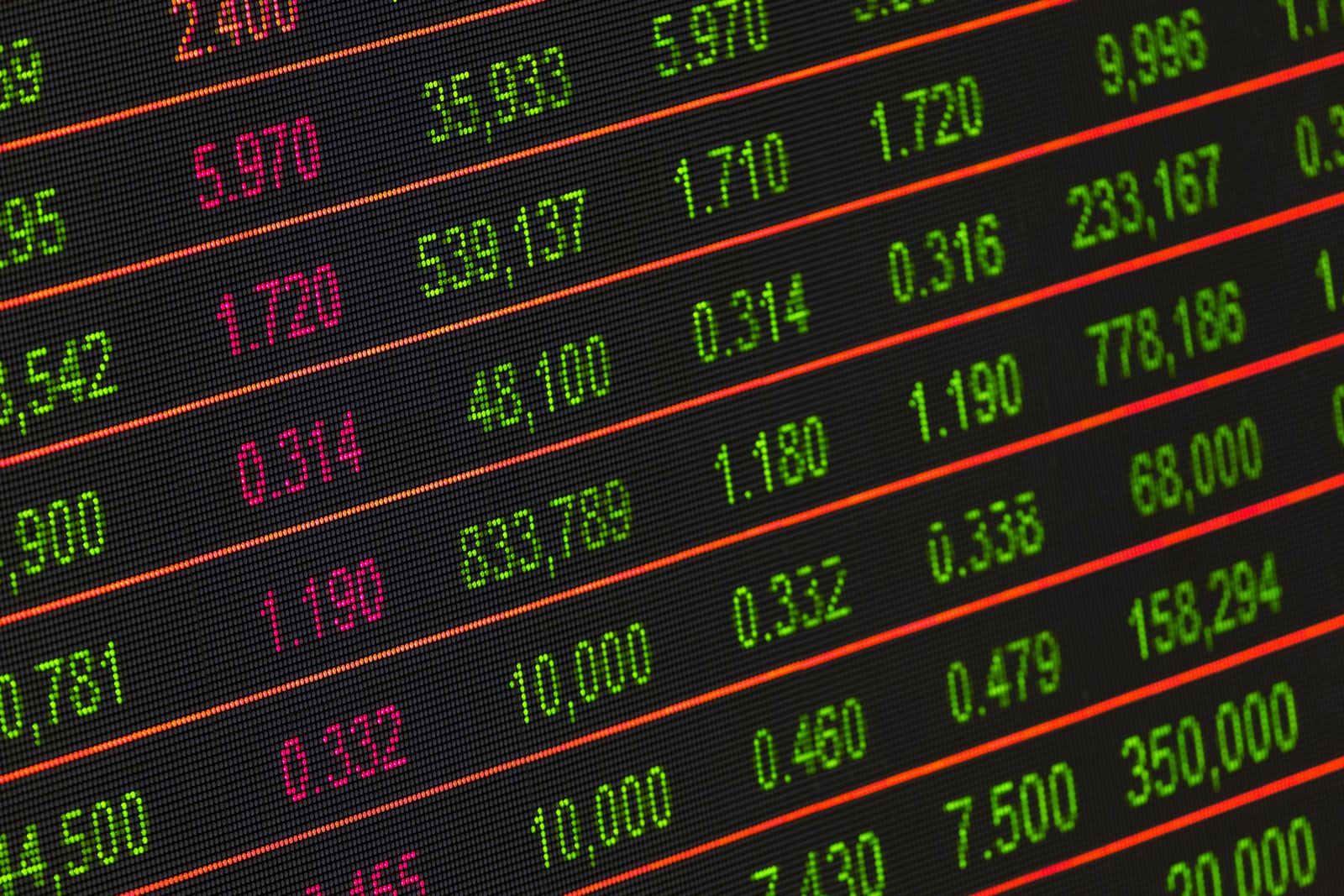
Quick answer: what a WebSocket stock API is for
Use a WebSocket stock API when your application must react to market events as they arrive. Typical workloads include live price boards, threshold alerts, portfolio monitoring, intraday analytics, and event-driven automation. Use REST for snapshots, reference data, historical backfills, and occasional requests. Most production systems need both.
Subscribe to the symbols and event types the product actually needs. Extra quote or trade traffic increases CPU, memory, and downstream storage pressure.
Connections close, networks partition, credentials expire, and clients fall behind. Reconnect, resubscribe, and gap detection belong in the initial design.
Real-time access, exchange coverage, display rights, retention, and redistribution are separate questions from whether a provider has a WebSocket endpoint.
Normalize and filter events first. Trigger an agent only when a rule, window, or anomaly requires higher-level interpretation.
WebSocket stock API vs REST stock API
The choice is not “modern protocol versus old protocol.” It is a workload decision. WebSocket maintains a bidirectional connection and lets the provider push subscribed events. REST opens a request-response exchange when the client needs a resource. Streaming reduces repeated polling, but it creates connection state, ordering, backpressure, and recovery work.
| Requirement | WebSocket | REST | Recommended pattern |
|---|---|---|---|
| Live trades or quotes | Strong fit | Polling creates delay and repeated calls | Subscribe by symbol and event type |
| Latest price on page load | May wait for next event | Strong fit | Fetch snapshot, then open stream |
| Historical candles | Poor fit | Strong fit | Backfill with REST or bulk files |
| Reference and corporate actions | Usually unnecessary | Strong fit | Cache and refresh on schedule |
| Recovery after disconnect | Requires resubscription and gap repair | Useful for recovery | Resume stream and query missing window |
Is WebSocket always better than polling?
No. A dashboard refreshed every five minutes may be simpler and cheaper with REST. WebSocket becomes valuable when many symbols must update continuously or the application must react between polling intervals. Compare end-to-end freshness, not only protocol latency: exchange entitlement, delayed feeds, client queues, processing time, and UI rendering can dominate the result.
How a stock market WebSocket data flow works
A reliable stream is a state machine, not one call. The client obtains credentials, opens a secure wss:// connection, authenticates, subscribes, confirms acknowledgements, consumes events, maintains heartbeats, and records checkpoints. If the connection drops, it reconnects with bounded backoff, restores subscriptions, and repairs any missing interval through the provider's supported recovery path.
Use a server-side credential store. Confirm the endpoint, feed, market entitlement, and whether authentication is sent in headers, URL parameters, or an initial message.
Send explicit symbols and channels. Do not assume that a sent subscription succeeded; process acknowledgement and error messages.
Map provider messages to an internal event schema. Preserve provider timestamps, sequence identifiers, conditions, and raw payload references.
Aggregate or filter the high-rate stream, then publish compact events to dashboards, alert services, storage, or an agent workflow.
On reconnect, restore subscriptions and compare the last processed timestamp or sequence with the provider's recovery data.
Snapshot plus stream prevents an empty starting state
A stream may not emit a message until the next trade or quote change. Fetching a REST snapshot first gives the application a known starting state. Open the stream before or immediately after the snapshot, buffer incoming events, and reconcile by timestamp so an update cannot disappear in the handoff.
WebSocket stock API messages and fields to inspect
“Real-time price” can mean last trade, best bid and ask, midpoint, provider-derived price, or an aggregate bar. Inspect the event contract before using a number in alerts or decisions.
| Message | Core fields | Useful for | Common mistake |
|---|---|---|---|
| Trade | symbol, price, size, exchange, conditions, timestamp, sequence | Last-sale display, volume, event detection | Treating every trade as the official close |
| Quote | bid, ask, sizes, venues, timestamp, conditions | Spread, liquidity, executable context | Calling a midpoint a traded price |
| Aggregate bar | window, OHLC, volume, VWAP, trade count | Charts, indicators, lower-rate processing | Ignoring whether the bar is partial or final |
| Status | market state, halt, feed status, reason, timestamp | Suppressing invalid alerts and monitoring feed health | Interpreting silence as no price movement |
Trades, quotes, or bars: which stream should you subscribe to?
Use trades when the product needs transaction events or volume. Use quotes when spreads and available sizes matter. Use aggregate bars when charting or indicators do not require every tick. A single “price” channel can be convenient, but inspect how that value is derived and whether it is delayed. Massive, for example, documents separate stock streams for trades, quotes, and aggregates.
WebSocket stock API providers to compare
Compare the feed contract, not a marketing label. Plans, exchange entitlements, delays, connection limits, symbol caps, message types, and commercial rights can change. The table summarizes publicly documented positioning and identifies what must be verified before implementation.
| Provider | Documented stream focus | Potential fit | Verify now |
|---|---|---|---|
| Alpaca | Stock streams with feed-specific endpoints and documented trade, quote, and bar messages. | U.S. equity applications and broker-connected workflows | Feed entitlement, market coverage, delay, connection limits |
| Massive | U.S. stock trades, quotes, aggregate bars, and additional market events. | Live dashboards, market monitoring, event-driven analytics | Plan access, feed type, data rights, recovery options |
| Finnhub | WebSocket trade or price updates with symbol, price, time, volume, and conditions. | Compact price-event monitoring across supported markets | Per-market streaming support, delay, connection entitlement |
| Twelve Data | Price streaming with subscribe, unsubscribe, reset, and heartbeat actions across supported symbols. | Multi-asset watchlists and international product prototypes | WebSocket credits, supported exchanges, redistribution rights |
Reviewed against public documentation in July 2026. This is not a permanent pricing or performance ranking, and it does not imply that every provider is currently callable through QVeris.
Can a free WebSocket stock API support production?
A free tier can validate authentication, message parsing, chart updates, and a small watchlist. Production suitability depends on exchange entitlement, delay, concurrent connections, symbol subscriptions, throughput, support, service commitments, and usage rights. Test peak-session message rates and forced reconnects before relying on any plan.
WebSocket stock API Python connection pattern
The exact endpoint, authentication, and subscription payload are provider-specific. Inspect the official schema first. This generic pattern keeps secrets in environment variables, separates subscription construction from message handling, and leaves a clear place for validation and checkpointing.
import json
import os
import time
from websocket import WebSocketApp

WS_URL = os.environ["MARKET_WS_URL"]
API_KEY = os.environ["MARKET_API_KEY"]
SYMBOLS = ["AAPL", "MSFT"]

def subscription():
    # Replace with the inspected provider contract.
    return {
        "action": "subscribe",
        "symbols": SYMBOLS,
        "channels": ["trades", "quotes"],
    }

def on_open(ws):
    ws.send(json.dumps({
        "action": "auth",
        "api_key": API_KEY,
    }))
    ws.send(json.dumps(subscription()))

def on_message(ws, raw):
    event = json.loads(raw)
    if event.get("type") in {"trade", "quote"}:
        validate_and_checkpoint(event)
        publish_normalized_event(event)

def on_error(ws, error):
    log_stream_error(error)

def run_stream():
    attempt = 0
    while True:
        app = WebSocketApp(
            WS_URL,
            on_open=on_open,
            on_message=on_message,
            on_error=on_error,
        )
        app.run_forever(ping_interval=20, ping_timeout=10)
        attempt += 1
        time.sleep(min(30, 2 ** min(attempt, 5)))

run_stream()
How should reconnect, heartbeat, and duplicate handling work?
Use the heartbeat method required by the provider, because application-level heartbeat messages and WebSocket ping frames are not interchangeable in every API. Reconnect with capped exponential backoff and jitter, then reauthenticate and resubscribe. Deduplicate with a provider sequence or trade identifier when available; otherwise use a documented composite key. After reconnect, query the missing time window through REST if the provider supports recovery.
Production reliability for real-time stock streams
A stream can remain connected while delivering stale, incomplete, duplicated, or delayed events. Monitor data health separately from socket health.
Track provider event time, receive time, processing time, and publish time. Alert on each stage, not one combined latency number.
Measure gaps, reversals, duplicates, and resets by channel and symbol where sequence information exists.
Use bounded queues and explicit overflow policy. Slow AI calls must not block the socket reader.
Understand holidays, halts, pre-market, after-hours, and symbols with no qualifying events before declaring the feed stale.
Record the last durable checkpoint, reconnection count, subscription acknowledgement, and repaired event window.
Validate required fields, tolerate documented optional fields, quarantine unknown message types, and version adapters.
How do you detect a silent or stale market-data stream?
Combine transport heartbeat, provider status messages, market calendar, and per-symbol event expectations. A liquid stock with no messages during regular trading may indicate a feed problem; an inactive symbol after hours may be normal. Compare a small set of sentinel symbols with an independent snapshot path, and alert when event-time lag or sequence gaps exceed workload-specific thresholds.
How QVeris helps with WebSocket stock API workflows
QVeris is a capability routing network for AI agents. It helps an agent discover market-data capabilities, inspect current inputs and outputs, and call a selected capability through a unified protocol. This is useful when a workflow combines live price data with reference data, news, fundamentals, or alert delivery.
Scope: QVeris is not the original exchange feed and this page does not claim that QVeris proxies every persistent WebSocket connection. Provider availability, transport type, schemas, prices, entitlements, and stream lifecycle support are dynamic. Use Discover and Inspect to verify the current capability before execution. Direct persistent streaming support through a selected capability needs confirmation.
Search for live U.S. equity quotes, minute bars, or threshold monitoring rather than assuming a specific provider.
Confirm whether the capability is snapshot, request-response, or streaming; then inspect symbols, channels, authentication, limits, cost signals, and response fields.
Call confirmed capabilities and combine them with news, reference, or notification tools only after validating timestamps and identifiers.
Review the QVeris REST API, Python SDK, real-time stock price API guide, and historical stock price API guide.
WebSocket stock API evaluation checklist
- Feed: trades, quotes, bars, status events, markets, exchanges, delay, and session coverage.
- Contract: endpoint, authentication, acknowledgement, heartbeat, error messages, sequence, and timestamps.
- Capacity: connections, subscriptions, throughput, burst behavior, client queue limits, and backpressure policy.
- Recovery: reconnect rules, resubscription, replay, REST backfill, duplicate handling, and maintenance windows.
- Rights: personal or commercial use, display, internal storage, derived data, redistribution, and audit requirements.
- Operations: status page, support, SLA if offered, schema changes, sandbox, usage metrics, and cost controls.
- Architecture: snapshot plus stream, normalized event model, durable checkpoints, monitoring, and provider adapter.
WebSocket stock API FAQ
It is a persistent connection that pushes subscribed stock-market events such as trades, quotes, or bars to a client as updates occur.
Use WebSocket for continuous live updates. Use REST for snapshots, history, reference data, and recovery. A robust application commonly uses both.
Some providers offer trial or free streaming access. Verify delay, exchange coverage, symbol and connection limits, commercial rights, and current plan terms.
Some do, while others stream only trades or prices. Inspect whether bars are per second or minute, partial or final, and how extended sessions are handled.
Persist a checkpoint, reconnect with capped backoff, reauthenticate, resubscribe, deduplicate repeated events, and backfill the missing window when supported.
The market may be closed, the symbol inactive, the subscription unacknowledged, the feed delayed, or the client unable to consume messages. Monitor each condition.
Usually no. Filter, aggregate, and apply deterministic rules first. Invoke the agent only when an event needs interpretation or a structured action.
QVeris helps agents discover, inspect, and call relevant capabilities. Whether a selected capability supports a persistent WebSocket lifecycle needs confirmation.