
AI Agents for Supply Chain Risk
Build AI agents that monitor supplier risk, logistics disruption, raw material bottlenecks, and company exposure through QVeris capability routing.
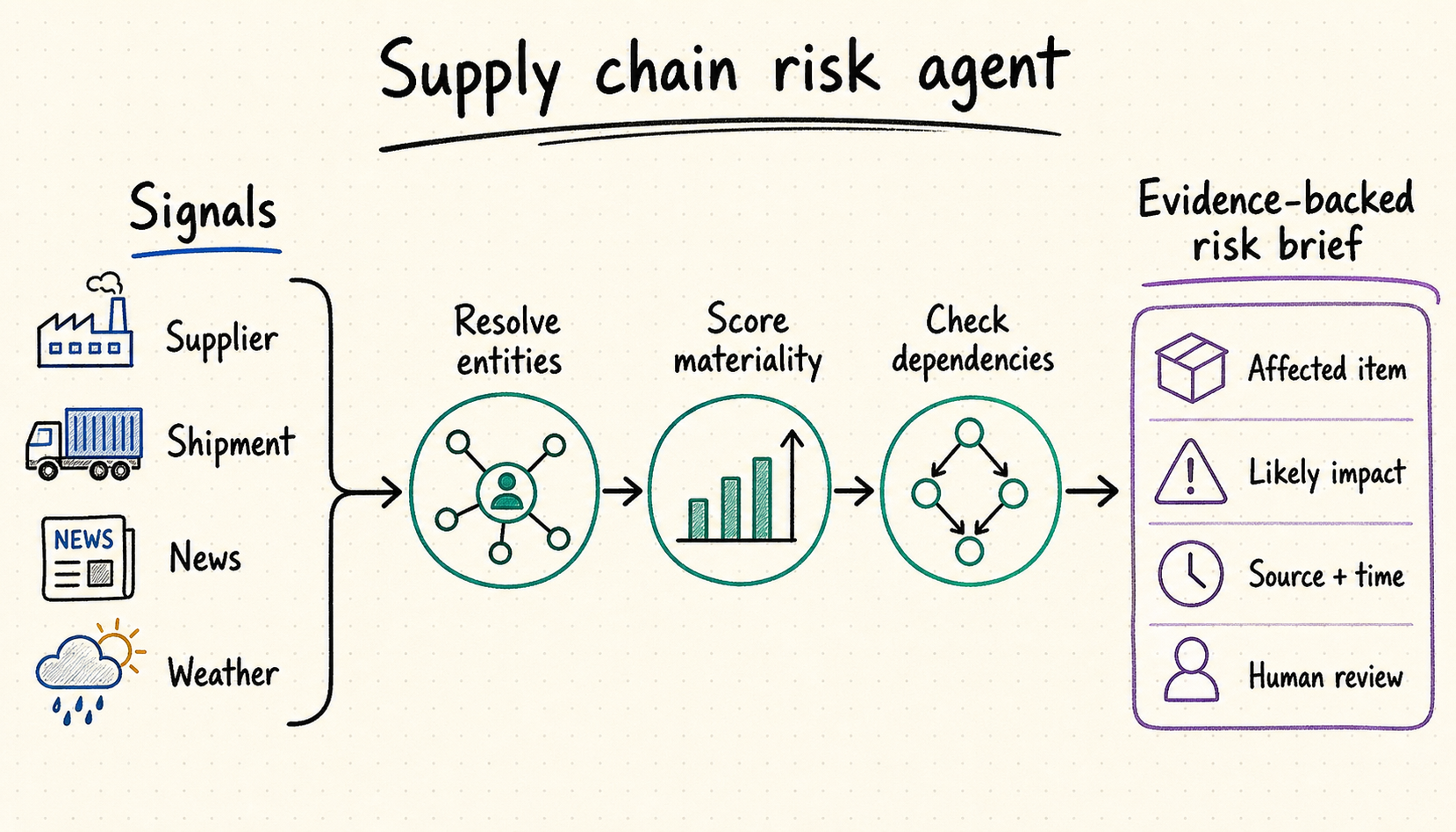
What Is Supply Chain Risk Management?
Supply chain risk management is the discipline of finding and responding to risks that can interrupt sourcing, production, delivery, revenue, or customer commitments. It covers supplier failure, port congestion, raw material shortages, sanctions, weather events, geopolitical shocks, regulatory changes, and sudden demand shifts.
For teams that need traffic-scale content and useful workflows, this scenario connects a high-demand search topic to a practical QVeris skill: supply chain bottleneck research. Instead of building one static dashboard, an AI agent can discover relevant capabilities, inspect their schemas, call fresh sources, and produce a risk brief.
Supply Chain Risks AI Agents Can Monitor
A strong supply chain risk management workflow watches weak signals before they become visible business damage.
Supplier Risk Analysis
Track supplier concentration, single-source dependencies, financial stress, production delays, capacity constraints, and regional exposure.
Disruption Monitoring
Monitor shipping congestion, weather events, strikes, conflict, regulatory changes, sanctions, and logistics bottlenecks that may affect delivery.
Raw Material Bottlenecks
Research shortages, price spikes, export restrictions, demand surges, and upstream constraints across critical inputs and commodities.
Company Exposure Analysis
Map how suppliers, facilities, transportation lanes, and regional dependencies can affect revenue, margins, inventory, or earnings risk.
Demand Signal Changes
Connect consumer demand, inventory commentary, alternative data, and channel signals to supply pressure before it appears in quarterly reports.
Procurement Intelligence
Support procurement and strategy teams with structured evidence, source links, risk tags, and recommended follow-up questions.
How QVeris Turns Risk Signals into Workflow Output
The QVeris pattern is simple: discover the right capability, inspect it before use, then call it for structured results.
// Example agent task
goal: "Identify supply chain bottlenecks for a target company"
discover: supplier risk, logistics disruption, raw material shortage
inspect: required inputs, freshness, provider, cost, output schema
call: selected capabilities through QVeris
output: risk summary, evidence, affected suppliers, next checks
Where This Scenario Fits
The same supply chain risk management scenario can serve multiple teams and search intents.
Procurement Teams
Use AI agents to watch supplier risk, category exposure, sourcing constraints, and early disruption signals before they hit purchase orders.
Operations Teams
Turn external signals into practical alerts around inventory, logistics, plant dependencies, and delivery risk.
Investment Research Teams
Research company exposure to bottlenecks, shortages, supplier concentration, and earnings risk before events are fully priced in.
Consulting and Strategy Teams
Prepare market maps, value-chain research, supplier dependency briefs, and client-ready risk summaries faster.
Traditional Monitoring vs QVeris Agent Workflow
| Requirement | Traditional approach | QVeris agent workflow |
|---|---|---|
| Find relevant sources | Manual search, dashboards, provider-by-provider setup | Discover capabilities from a single routing layer |
| Check tool fit | Read docs and test calls manually | Inspect schema, inputs, cost, and output before execution |
| Monitor disruptions | Static alerts and fragmented feeds | Call the right capability for each risk question |
| Produce analysis | Analyst copies signals into reports | Generate structured risk briefs with evidence and next checks |
Useful Supply Chain Risk References
External references help readers understand the broader supply chain risk management topic and give the page credible outbound context.
McKinsey on Supply Chain Risk
Research context on why supply chain risk management remains a board-level priority.
NIST Supply Chain Risk Management
Government guidance on identifying, assessing, and managing supply chain risk.
Gartner SCRM Topic
Market framing for supply chain risk management, resilience, and disruption planning.
Supply Chain Risk Management FAQ
What is supply chain risk management?
How do AI agents help monitor supply chain disruptions?
Is this page for supply chain software buyers or AI agent builders?
Which QVeris skill does this scenario map to?
Build a Supply Chain Risk Agent
Use QVeris to route your AI agent from a business risk question to the right tools, schemas, calls, and structured supply chain risk output.
用 AI Agent 管理供应链风险
使用 QVeris 能力路由,让 AI Agent 监控供应商风险、物流中断、原材料瓶颈和公司级供应链暴露。
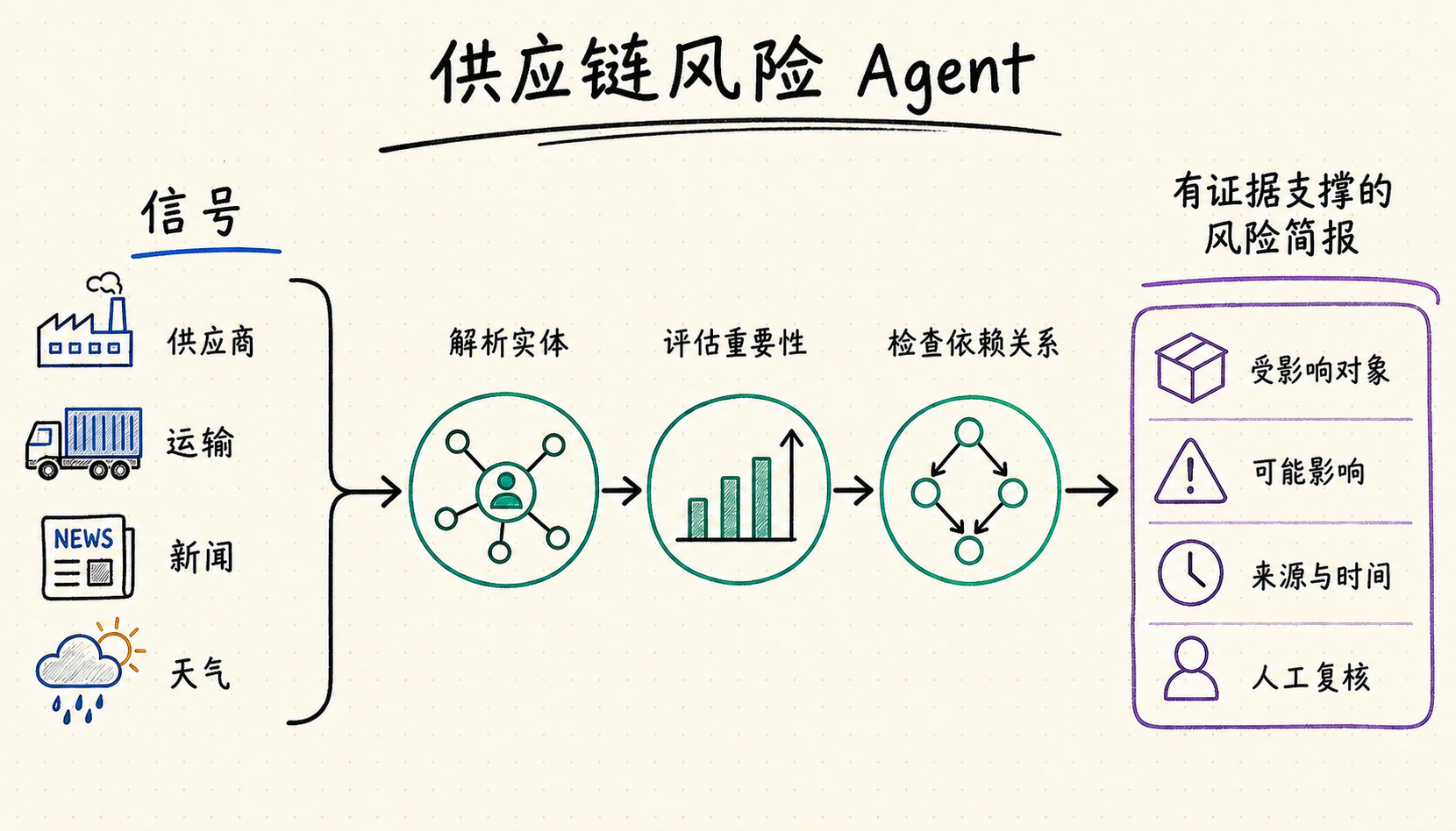
什么是供应链风险管理?
供应链风险管理是发现并应对可能影响采购、生产、交付、收入或客户承诺的风险。它覆盖供应商失效、港口拥堵、原材料短缺、制裁、天气事件、地缘冲突、监管变化和需求突然波动。
对于想先获取搜索流量、同时又要贴合产品能力的页面,这个场景把高搜索需求的主题和 QVeris 的供应链瓶颈研究 skill 连接起来。AI Agent 不只是看一个静态看板,而是发现能力、检查 schema、调用实时来源,并生成风险简报。
AI Agent 可以监控哪些供应链风险
好的供应链风险管理工作流,会在风险变成业务损失之前捕捉弱信号。
供应商风险分析
跟踪供应商集中度、单一来源依赖、财务压力、生产延期、产能约束和区域暴露。
供应链中断监控
监控运输拥堵、天气事件、罢工、冲突、监管变化、制裁和物流瓶颈。
原材料瓶颈研究
研究短缺、价格上涨、出口限制、需求激增以及关键原料和大宗商品的上游约束。
公司暴露分析
映射供应商、工厂、运输路线和地区依赖如何影响收入、利润率、库存或业绩风险。
需求信号变化
把消费需求、库存评论、另类数据和渠道信号连接到供应压力上,在财报前形成判断。
采购情报
为采购和战略团队提供结构化证据、来源链接、风险标签和后续追问建议。
QVeris 如何把风险信号变成工作流输出
QVeris 的模式很简单:先发现合适能力,再检查参数和输出结构,最后调用能力得到结构化结果。
// Agent 任务示例
goal: "识别目标公司的供应链瓶颈"
discover: 供应商风险、物流中断、原材料短缺
inspect: 所需输入、新鲜度、提供方、成本、输出结构
call: 通过 QVeris 调用选定能力
output: 风险摘要、证据、受影响供应商、下一步检查
这个场景适合哪些团队
同一个供应链风险管理场景,可以覆盖多个团队和搜索意图。
采购团队
让 AI Agent 监控供应商风险、品类暴露、采购约束和早期中断信号。
运营团队
把外部信号转化为库存、物流、工厂依赖和交付风险相关的行动提示。
投资研究团队
研究公司对瓶颈、短缺、供应商集中度和业绩风险的暴露,在事件充分定价前形成判断。
咨询与战略团队
更快准备市场地图、价值链研究、供应商依赖简报和客户可用的风险摘要。
传统监控 vs QVeris Agent 工作流
| 需求 | 传统方式 | QVeris Agent 工作流 |
|---|---|---|
| 找到相关来源 | 手动搜索、看板、逐个配置供应商 | 从统一能力路由层发现能力 |
| 判断工具是否适合 | 手动读文档并测试调用 | 执行前检查 schema、输入、成本和输出 |
| 监控中断 | 静态告警和分散数据源 | 根据风险问题调用合适能力 |
| 产出分析 | 分析师手动复制信号进报告 | 生成带证据和后续检查的结构化风险简报 |
供应链风险管理参考资料
外部链接帮助读者理解供应链风险管理的大背景,也为页面提供可信的站外参考。