QVeris

Finance & Market Data

Best Financial Data APIs for ChatGPT

Compare financial data APIs for ChatGPT across market data, filings, macro coverage, freshness, licensing, and agent readiness.

Published: April 15, 2026 · By the QVeris Team

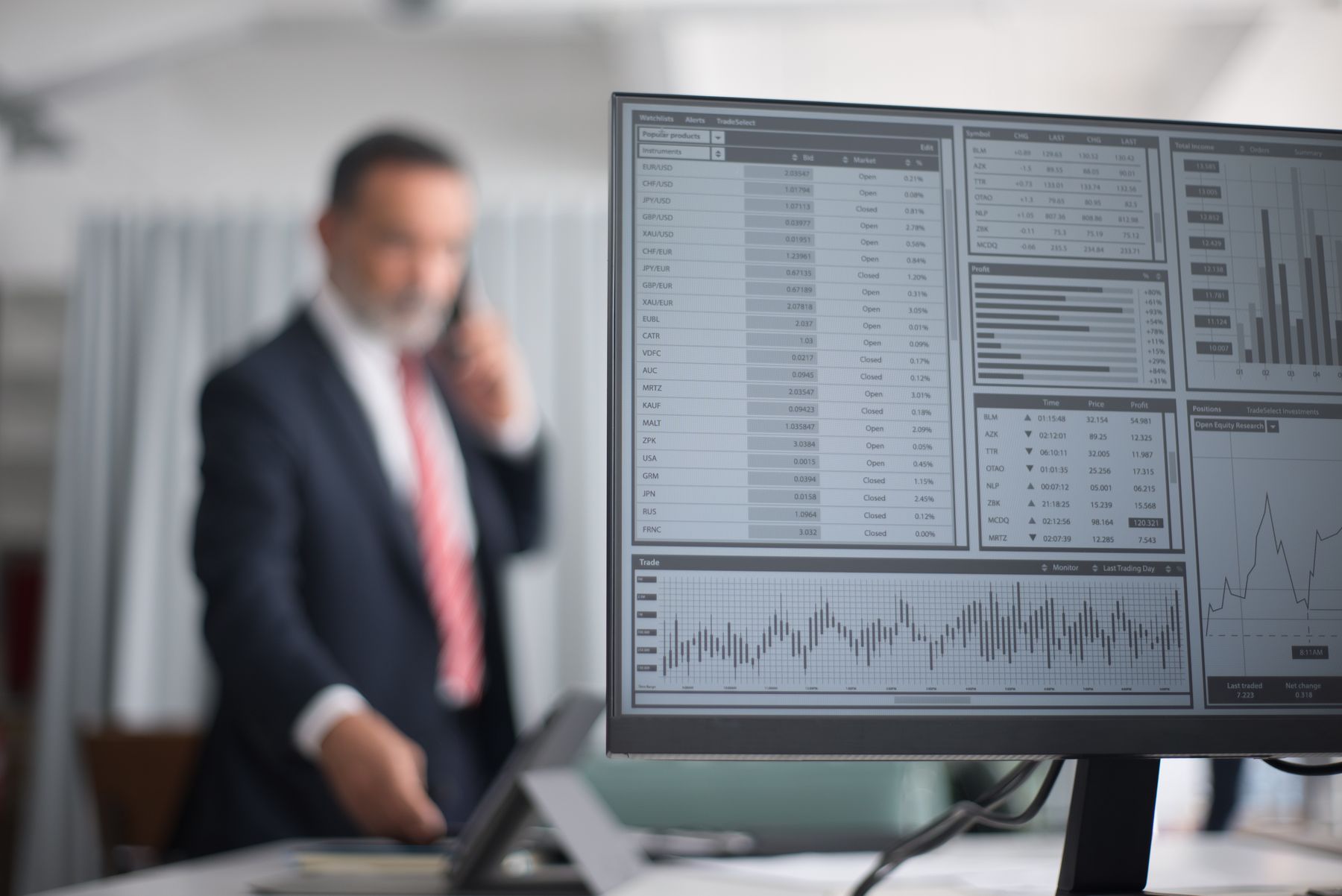
An analyst reviewing financial charts and source data
Scope

What “best” means for a ChatGPT workflow

The API is only one layer. ChatGPT still needs a narrow tool schema, deterministic validation, timestamps, citations, and permission controls.

Comparison

Financial data API shortlist by job

This is a fit matrix, not a universal ranking. Coverage, entitlements, latency, and limits vary by plan and market; verify them in official documentation before launch.

SourceBest fitUseful dataAgent advantageVerify before production
Alpha VantageFast prototypesEquities, FX, crypto, indicators, fundamentals, economic seriesBroad REST surface and official MCP/AI-agent entry pointRate limits, endpoint entitlements, data freshness
MassiveU.S. market depthStocks, options, futures, indices, FX, crypto, bulk filesREST, streaming, and bulk history support research and backtestsExchange entitlements, real-time status, redistribution rights
Twelve DataMulti-asset global workflowsStocks, FX, ETFs, funds, commodities, crypto, indicatorsConsistent REST and WebSocket patterns across asset classesMarket-specific delay, null handling, credits and timezone rules
FinnhubResearch with news and estimatesQuotes, fundamentals, estimates, transcripts, news, alternative dataOne surface can support multi-step company researchDataset-specific plans, history depth, geographic coverage
Financial Modeling PrepCompany fundamentalsStatements, ratios, profiles, estimates, transcripts, market endpointsConvenient normalized fields for structured company comparisonsRestatement handling, source lineage, commercial usage terms
Nasdaq Data LinkSpecialist datasetsCurated free and premium datasets from multiple publishersDataset catalog supports targeted research beyond common quotesPublisher methodology, update schedule, license per dataset
Alpaca Market DataData beside trading infrastructureEquities, options, crypto market data through historical and streaming interfacesA practical fit when research and controlled execution share a stackFeed selection, subscription limits, strict action approvals
SEC EDGAR APIsAuthoritative U.S. filingsSubmissions and XBRL company facts from the regulatorPrimary-source evidence for cited filing researchFair-access policy, taxonomy mapping, amended filings
Best-fit profiles

Pick the data shape before the provider

01 · MARKET

Quotes and time series

Use Twelve Data or Alpha Vantage for approachable multi-asset prototypes. Evaluate Massive when U.S. ticks, options, streaming, or bulk history are central. A model should receive compact windows and calculated features—not an unbounded tick stream.

02 · FUNDAMENTALS

Statements and company comparison

FMP and Finnhub offer normalized company data that is convenient for cross-company prompts. Pair normalized values with filing links or SEC facts when the conclusion depends on accounting definitions, restatements, or a specific reporting period.

03 · EVIDENCE

Filings and auditable research

Use SEC EDGAR for U.S. filing evidence, then let ChatGPT summarize selected sections or explain deterministic calculations. Preserve accession, filing date, form type, period, units, and source URL with every extracted fact.

04 · SPECIALIST

Macro and alternative datasets

Nasdaq Data Link is useful when the question requires a named specialist dataset. Alpha Vantage, Finnhub, and FMP also expose selected economic, news, or alternative fields. Judge each dataset independently; a provider brand does not guarantee identical methodology across feeds.

Evaluation

Seven checks that matter more than a feature count

1. ProvenanceCan every value carry provider, endpoint, symbol, period, units, and retrieval time?
2. Freshness semanticsDistinguish real-time, delayed, end-of-day, last-updated, and effective dates.
3. Point-in-time behaviorKnow whether historical answers include later restatements or constituent changes.
4. Coverage and identifiersTest exchanges, asset classes, delisted symbols, share classes, currencies, and corporate actions.
5. Schema qualityPrefer typed fields, explicit nulls, stable errors, pagination, and documented units.
6. LicensingConfirm display, derived-data, caching, redistribution, and model-use rights.
7. Operational fitMeasure rate limits, latency, retry behavior, support, status visibility, and cost at your query mix.
Decision ruleRun a representative evaluation set; do not choose from documentation alone.
Implementation

A safer ChatGPT finance architecture

OpenAI’s function-calling guidance supports structured tool definitions; MCP can expose tools to compatible clients. Neither replaces server-side validation or data licensing.

Define the financial question

Convert “analyze this stock” into a bounded job: symbols, market, metric definitions, reporting period, acceptable delay, currency, and output evidence.

  • Resolve ambiguous tickers and share classes before any data call.
  • State whether the answer needs a live snapshot, a point-in-time view, or the latest revised record.
EVIDENCE: REQUEST CONTRACT

Expose narrow read tools

Prefer tools such as get_quote, get_financial_facts, and get_filing_section over a generic URL fetcher. Validate symbols, intervals, ranges, and response size on the server.

  • Use enums for intervals, markets, statement types, and allowed output formats.
  • Keep credentials server-side and separate research tools from order or payment actions.
EVIDENCE: SCHEMA + PERMISSION TEST

Normalize without erasing provenance

Return a compact envelope containing value, units, source, observed time, effective period, delay status, and warnings. Keep raw responses outside the prompt for audit and replay.

  • Map provider symbols to an internal identifier while preserving the original symbol.
  • Do not convert a missing field to zero; carry an explicit null and reason.
EVIDENCE: REPLAYABLE RESPONSE

Calculate deterministically

Use code for returns, growth rates, ratios, currency conversion, and date alignment. Let the model interpret validated outputs rather than perform long arithmetic from prose.

  • Version formulas and record input rows so a reviewer can reproduce each result.
  • Test split adjustments, fiscal calendars, currency dates, and divide-by-zero behavior.
EVIDENCE: TESTED CALCULATION

Render citations and uncertainty

Show the user which source and period support each conclusion. If feeds disagree or a field is missing, report the conflict instead of silently selecting a value.

  • Attach citations at the claim level, not as a generic source list after the answer.
  • Label delayed data, estimates, inferred comparisons, and unresolved conflicts differently.
EVIDENCE: CLAIM-LEVEL LINEAGE
Tool schema

Keep the model-facing response small and explicit

{ "symbol": "AAPL", "metric": "revenue", "value": 000000, "currency": "USD", "period": "FY", "period_end": "YYYY-MM-DD", "source": { "provider": "...", "url": "...", "retrieved_at": "..." }, "status": { "delay": "...", "restated": null, "warnings": [] } }

Illustrative schema only—the value is intentionally not real. See the official OpenAI function-calling guide and MCP documentation. If you want to discover finance tools without hard-coding every provider, review the QVeris financial data MCP pattern.

Workload patterns

Build a source stack around the question

A useful finance assistant usually needs one primary source, an optional corroborating source, and a deterministic calculation layer. These patterns show where each component earns its place.

QUOTE → CONTEXT → EXPLANATION

“Why did this stock move?”

Use a market-data feed for the verified price window and a news or filing source for candidate events. The model may connect timing and narrative, but it should label causality as an inference unless an official disclosure supports it.

  • Output: timestamped price move, cited events, alternative explanations
  • Reject: unlabeled “the stock rose because…” claims
FACTS → FORMULA → COMPARISON

“Compare two companies”

Use a normalized fundamentals API for speed, then preserve links to the underlying filing or company facts. Align fiscal periods, currencies, units, and accounting definitions before computing margins or growth.

  • Output: comparable period table, formula version, exceptions
  • Reject: mixed quarterly and annual values
FILING → PASSAGE → CITED SUMMARY

“What changed in the filing?”

Retrieve the exact form, accession, filing date, and relevant section. Compare passages or XBRL facts outside the model, then ask ChatGPT to explain material differences without inventing management intent.

  • Output: before/after evidence and section links
  • Reject: summary without document identity
SERIES → RELEASE CALENDAR → SCENARIO

“How does macro data affect the thesis?”

Keep observation date, release date, revision status, frequency, and units. The first release and the latest revised series answer different questions; your tool contract must say which one it returns.

  • Output: dated series, scenario assumptions, revision warning
  • Reject: hindsight inserted into historical analysis
STREAM → AGGREGATE → ALERT

“Monitor a watchlist”

Use WebSocket data only where continuous updates matter. A rules engine should deduplicate, aggregate, and threshold events before the model writes an alert, otherwise token use and false positives grow with every tick.

  • Output: trigger, window, baseline, source time
  • Reject: model invocation on every raw event
RESEARCH → REVIEW → ACTION GATE

“Research, then take action”

Keep research and execution in different permission domains. The research agent may draft a proposed action with evidence; a policy layer and a human must approve parameters before a separate execution service receives them.

  • Output: proposal, evidence pack, approval state
  • Reject: financial text triggering autonomous execution
Validation playbook

A 14-day pilot before committing to a provider

Documentation describes capabilities; a pilot reveals whether the feed works for your symbols, questions, controls, and traffic shape. Use the same evaluation set for every candidate.

Days 1–3 · Contract

Choose 20–30 representative questions across quotes, fundamentals, filings, and failure cases. Define required fields, acceptable freshness, evidence, and a correct or reviewable outcome.

Days 4–7 · Coverage

Test common and awkward symbols: multiple exchanges, share classes, delisted names, corporate actions, missing fields, non-USD values, and amended filings. Record every manual mapping.

Days 8–11 · Operations

Replay the query mix under expected concurrency. Exercise 429 responses, timeouts, nulls, schema changes, and provider outages. Verify caching does not hide stale data.

Days 12–14 · Decision

Review answer traceability, coverage gaps, latency distribution, projected request cost, licensing fit, support path, and migration effort. Approve, reject, or retain as a secondary source.

Score evidence, not eloquence. Suggested scorecard rows are answer correctness, claim-level citation coverage, freshness compliance, symbol coverage, schema stability, p95 tool latency, recovery behavior, licensing fit, and reviewer effort. Do not publish a benchmark unless the method, date, sample, and limitations are visible.
Production controls

Failure modes a provider table cannot solve

Stale data presented as live

Store exchange time, provider retrieval time, delay class, and market-session state separately. Do not let the model infer “live” from a recent-looking price.

Restatements and mismatched periods

Fundamental providers may normalize fields differently, and filings can be amended. Pin fiscal period, form, units, and retrieval version; compare like with like before asking the model for a narrative.

Prompt injection inside news or filings

Treat retrieved text as untrusted data. It must not change tool permissions, reveal credentials, or trigger trades. Separate read-only research from any execution tool and require explicit approval.

Licensing and redistribution

An API key does not automatically grant the right to display, cache, redistribute, or train on every field. Review the contract for each feed and avoid sending unnecessary proprietary data into model context.

Not investment advice: this guide evaluates data infrastructure. Models and APIs can be wrong or delayed. Keep consequential financial decisions under qualified human review.
FAQ

Questions about financial APIs and ChatGPT

Can ChatGPT access real-time financial data?

Yes, when it is connected to a licensed data source through an app, tool call, GPT Action, MCP server, or developer-built backend. The model alone is not a market-data feed.

What is the best free financial data API for ChatGPT?

There is no universal best free option. Alpha Vantage is approachable for prototypes, SEC EDGAR is authoritative for U.S. filings, and vendor trial tiers can help validate coverage. Confirm current limits and licensing before production use.

Should a ChatGPT finance agent use REST or WebSocket data?

Use REST for snapshots, filings, fundamentals, and scheduled research. Use WebSocket streams only when the workflow needs continuous low-latency updates, and aggregate events before passing them to the model.

Can ChatGPT make investment decisions from API data?

It can assist research, but financial data can be delayed, revised, incomplete, or licensed for limited uses. Keep provenance visible, validate calculations deterministically, and require human approval for consequential actions.

Test the question with real tool schemas

Start with one representative finance query, inspect matching capabilities and required parameters, then test with non-sensitive data before adding production credentials.

A verified profile link does not guarantee entitlement, field availability, price or current execution success; inspect the current contract before calling.

Best Financial Data APIs for ChatGPT | QVeris Guides