
What Is an AI Market Monitoring Agent?
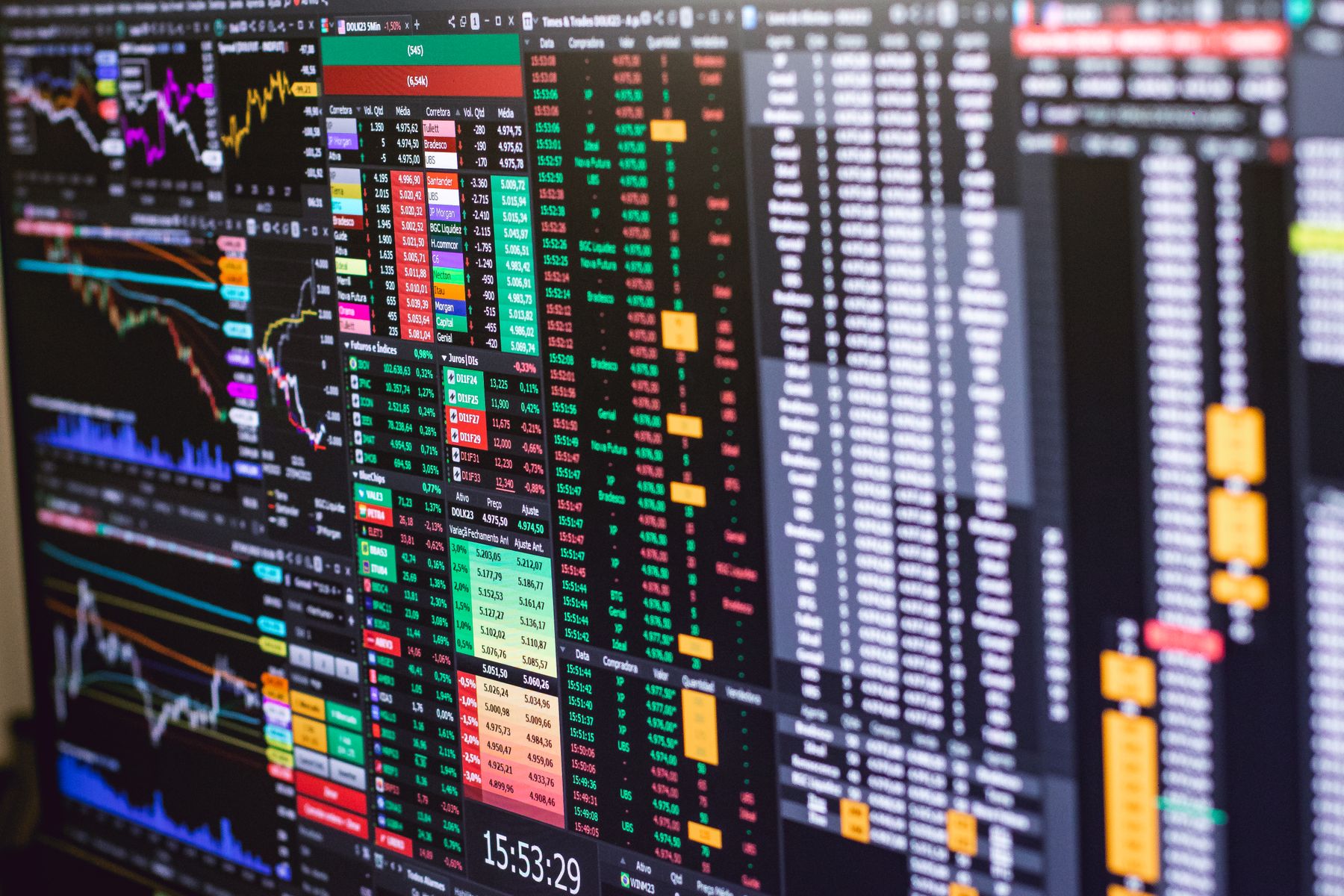
An AI market monitoring agent is software that automatically observes market data, identifies conditions worth investigating, and triggers a structured response. The response may be an alert, a portfolio-risk check, a research task, or a request for human review. Unlike a conventional dashboard, the agent does not depend on a person watching every panel. Unlike a single indicator script, it can combine heterogeneous evidence and explain why an event matters.
A practical market monitoring AI agent can watch real-time prices and volume, compare current behavior with historical baselines, track changes in financial news sentiment, observe scheduled releases from sources such as the Federal Reserve Economic Data service, and monitor crypto transfers or liquidity conditions. It can then produce a report containing the trigger, supporting values, source timestamps, confidence, and suggested next checks.
Developers often build rather than buy because monitoring logic is strategy-specific. A generic product may support fixed watchlists and thresholds, but a quant team may need factor-aware baselines, a fintech product may require tenant-specific permissions, and a risk team may need internal position data. Owning the orchestration also makes the alert explainable: every threshold, tool call, and model output can be logged and tested.
Key Signals for a Market Monitoring AI Agent
The quality of automated market monitoring depends less on the number of feeds than on whether each signal has a clear purpose. Start with five categories and define what constitutes a meaningful change before writing the polling loop.
Thresholds should adapt to the asset and session. A two-percent move may be extraordinary for a large-cap stock and routine for a smaller token. Use rolling distributions, median absolute deviation, or volatility-normalized returns before asking an LLM to interpret an event. Deterministic detection keeps costs predictable and reduces false positives; the model adds context after the system has established that something unusual occurred.
Why QVeris Supports Real-Time Market Monitoring AI
A monitoring system usually needs several data categories: quotes, bars, company events, news, sentiment, macro releases, and sometimes on-chain activity. Direct integrations can work, but every provider introduces a separate authentication method, schema, rate policy, retry strategy, and failure mode. QVeris provides a common capability layer across more than 10,000 financial capabilities so the application can discover and execute the tools relevant to each monitoring task.
The workflow separates three responsibilities. Discover searches for capabilities with a natural-language requirement such as “real-time US stock quote with timestamp.” Inspect returns the selected tool's parameters, output shape, provider details, latency, and cost information. Call executes the capability with validated arguments and returns structured output. This separation helps developers avoid loading every possible tool into an agent's context or hardcoding assumptions about one provider.
QVeris supports REST, a Python SDK, and MCP-based clients including Claude and Cursor. Review current capability and cost details on the QVeris Finance provider page. The architecture is most useful when an agent must combine several financial sources without maintaining a custom adapter for each one.
Step-by-Step: Build a Market Monitoring Agent
The following Python examples show a complete control flow while keeping provider-specific details flexible. QVeris capability identifiers and arguments can change as tools evolve, so always use the current Python SDK guide and the Inspect response as the source of truth. Keep API keys in environment variables and never allow model-generated arguments to bypass schema validation.
1Register and initialize the QVeris client
Create a QVeris account, generate an API key, and store it in your secret manager or local environment. Install the current Python SDK from the official docs. The reusable client below becomes the entry point for discovery, inspection, and execution.
import os
import asyncio
from qveris import QVerisClient

client = QVerisClient(
    api_key=os.environ["QVERIS_API_KEY"]
)

WATCHLIST = ["AAPL", "MSFT", "NVDA", "SPY"]
Separate credentials from strategy configuration. A watchlist, polling interval, and risk threshold can live in versioned application settings, while secrets remain outside source control. Production deployments should also rotate keys and redact authorization headers from logs.
2Discover real-time price and sentiment capabilities
Search by desired output rather than by provider name. One query can target a real-time quote with exchange timestamp and volume; another can target recent market sentiment with source metadata. Save the returned capability IDs so the system can inspect them before execution.
async def discover_monitoring_tools():
    price_tools = await client.discover(
        query=(
            "real-time US stock price, percentage change, "
            "volume, exchange timestamp, structured JSON"
        ),
        limit=5,
    )
    sentiment_tools = await client.discover(
        query=(
            "recent financial news sentiment for a stock ticker "
            "with article source, timestamp, and sentiment score"
        ),
        limit=5,
    )
    return price_tools, sentiment_tools

price_results, sentiment_results = asyncio.run(
    discover_monitoring_tools()
)
Do not execute the first result automatically. Rank candidates by coverage, latency, reliability, output shape, and cost. A real-time workflow should reject delayed feeds when timeliness is a hard requirement. A research workflow may accept delayed data if the source offers better history or metadata.
3Inspect the selected tool schema
Inspection tells the application whether a tool expects a ticker, exchange, time range, interval, region, or another identifier. Convert required fields into a local validation model and refuse execution when a value is missing or unsupported.
async def inspect_tool(capability_id: str):
    details = await client.inspect(
        capability_ids=[capability_id]
    )
    return details

PRICE_CAPABILITY_ID = "CAPABILITY_ID_FROM_DISCOVERY"
price_schema = asyncio.run(
    inspect_tool(PRICE_CAPABILITY_ID)
)
print(price_schema)
Inspect also gives you the information needed for routing. If one capability is unavailable for a region or asset class, the agent can choose another inspected candidate. Keep a cached copy of stable schemas, but refresh them periodically so provider changes do not silently break the monitor.
4Build the monitoring loop and anomaly detector
Call the selected capability with validated arguments, normalize the response into an internal observation, and compare it with a baseline. The example uses a percentage-change threshold for clarity; production systems should add volatility, time-of-day, liquidity, and data-quality checks.
from dataclasses import dataclass
from datetime import datetime, timezone

@dataclass
class Observation:
    symbol: str
    price: float
    change_pct: float
    volume: float
    observed_at: str

async def fetch_quote(symbol: str) -> Observation:
    result = await client.call(
        capability_id=PRICE_CAPABILITY_ID,
        arguments={"symbol": symbol},
    )
    data = result["data"]  # Map fields from the inspected schema.
    return Observation(
        symbol=symbol,
        price=float(data["price"]),
        change_pct=float(data["change_pct"]),
        volume=float(data.get("volume", 0)),
        observed_at=data.get(
            "timestamp",
            datetime.now(timezone.utc).isoformat(),
        ),
    )

def is_anomalous(obs: Observation) -> bool:
    return abs(obs.change_pct) >= 2.0

async def scan_watchlist():
    observations = await asyncio.gather(
        *(fetch_quote(symbol) for symbol in WATCHLIST),
        return_exceptions=True,
    )
    return [
        obs for obs in observations
        if isinstance(obs, Observation) and is_anomalous(obs)
    ]
Add exponential backoff, provider-aware rate controls, timeouts, and stale-data checks before production. Store the raw response alongside the normalized observation so an analyst can audit the alert. Deduplicate events with a key such as symbol, trigger type, and time bucket; otherwise a persistent condition will create a new alert on every poll.
5Use Claude to generate a grounded alert report
Send only anomalous observations and relevant supporting evidence to the model. The model should summarize context, not invent missing market data or decide whether a trade must occur. Request JSON so downstream notification and audit systems can validate the response.
import json
from anthropic import Anthropic

anthropic = Anthropic(
    api_key=os.environ["ANTHROPIC_API_KEY"]
)

def create_alert_report(observation: Observation) -> dict:
    prompt = {
        "task": "Explain this market anomaly for an analyst.",
        "rules": [
            "Use only the supplied evidence.",
            "State uncertainty explicitly.",
            "Do not provide a buy or sell recommendation.",
        ],
        "observation": observation.__dict__,
        "required_output": {
            "headline": "string",
            "why_it_triggered": "string",
            "possible_context": ["string"],
            "next_checks": ["string"],
            "confidence": "low | medium | high",
        },
    }
    message = anthropic.messages.create(
        model=os.environ["ANTHROPIC_MODEL"],
        max_tokens=700,
        messages=[{
            "role": "user",
            "content": json.dumps(prompt),
        }],
    )
    return json.loads(message.content[0].text)
Model names and SDK behavior change, so confirm the current options in the Anthropic documentation. For higher assurance, validate the JSON against a schema and attach the original observation, source URL, capability ID, and execution ID to every report.
6Configure notifications and scheduling
Deliver alerts to the place where the team already works. The example posts a compact message to a Slack-compatible webhook. Email, Microsoft Teams, PagerDuty, or an internal event bus follow the same pattern. Keep notification delivery outside the detector so a temporary webhook failure does not block market-data collection.
import requests

def send_slack_alert(report: dict) -> None:
    webhook = os.environ["SLACK_WEBHOOK_URL"]
    body = {
        "text": (
            f"*{report['headline']}*\n"
            f"{report['why_it_triggered']}\n"
            f"Confidence: {report['confidence']}"
        )
    }
    response = requests.post(webhook, json=body, timeout=10)
    response.raise_for_status()

async def run_once():
    anomalies = await scan_watchlist()
    for observation in anomalies:
        report = create_alert_report(observation)
        send_slack_alert(report)

if __name__ == "__main__":
    asyncio.run(run_once())
Run this job with a scheduler such as cron, a managed cloud scheduler, or a durable workflow system. For sub-minute monitoring, prefer streaming or event-driven feeds over aggressive polling. Record heartbeat metrics so the absence of alerts is distinguishable from a stopped process.
Real-World Uses for Automated Market Monitoring
A fund can calculate volatility-aware thresholds across a 500-stock universe, enrich only the strongest anomalies with news and event context, and route alerts by sector or portfolio ownership. Analysts receive fewer but better-supported events.
A quant workflow can monitor momentum, liquidity, dispersion, correlation, or alternative-data factors in real time. The agent flags regime changes and packages the relevant observations for researchers without allowing an LLM to replace deterministic factor calculations.
The system can combine large wallet transfers, exchange inflows, funding rates, open interest, and spot-price movement. Cross-signal confirmation helps reduce alerts caused by a single transfer between known internal wallets.
A monitoring agent can connect a credible headline to the affected security, compare pre- and post-publication price behavior, and alert when both sentiment and market response exceed defined thresholds. News remains evidence, not automatic proof of causation.
Market events can be joined with internal positions, concentration limits, and scenario sensitivities. A risk alert then explains not only what moved, but why the move matters to the current portfolio and which exposure requires review.
Advanced Features for an AI Agent Financial Analysis Workflow
Once the basic loop is reliable, extend it carefully. Run multiple assets concurrently with bounded semaphores so parallelism does not overwhelm a provider. Store alert thresholds by asset, session, and strategy rather than using one global value. Backtest each trigger against historical data to estimate frequency, precision, and average time to meaningful follow-through.
Add suppression windows and event fingerprints to remove duplicates. Use a two-stage severity model: deterministic rules assign an initial priority, then the AI layer adds context without lowering a hard risk threshold. Integrate Slack or email only after building a durable alert store, because chat messages are difficult to audit. Finally, measure data freshness, capability latency, failed calls, model parsing errors, alerts per day, analyst dismissals, and confirmed useful alerts. Those metrics reveal whether the system creates intelligence or merely more notifications.
For authoritative reference data, developers may also compare provider documentation from services such as Alpha Vantage, Polygon, and official macroeconomic sources. QVeris reduces integration work, but source suitability, licenses, exchange entitlements, and latency requirements remain application decisions.
Production Checklist for a Market Monitoring AI Agent
Before enabling automated market monitoring for a real team, test the entire path rather than only the data call. First, verify clock synchronization and timestamp semantics. A quote timestamp, provider receipt time, agent processing time, and notification time represent different moments; mixing them can make a delayed observation appear current. Reject data older than the maximum age allowed by the strategy and make the age visible in every alert.
Second, design for partial failure. The monitor should continue scanning unaffected symbols when one capability times out. Use bounded retries, circuit breakers, and a fallback only when the fallback meets the same licensing and freshness requirements. Record which provider produced each observation so analysts can compare conflicting values. A silent switch from real-time to delayed data is worse than a visible temporary gap.
Third, separate detection from action. An alert may launch additional research, but it should not automatically create an order unless the organization has implemented independent controls, pre-trade checks, position limits, and explicit authorization. Give each alert a stable ID and lifecycle state such as new, acknowledged, investigating, resolved, or false positive. This turns notifications into an operational workflow instead of a stream of disposable messages.
Finally, test with replayed historical events and controlled failure drills. Simulate stale prices, malformed JSON, rate limits, duplicate news, missing volume, and an unavailable notification endpoint. Set service-level objectives for scan completion, data freshness, and delivery latency. An agent is ready for production when the team can explain what happened during both a valid alert and a failed monitoring cycle.
Conclusion: Launch Your AI Market Monitoring Agent
A production AI market monitoring agent combines reliable tool access, deterministic anomaly detection, contextual AI analysis, traceable evidence, and a notification policy that respects human attention. QVeris supplies a unified Discover → Inspect → Call layer for financial capabilities, while your application retains control over strategy, thresholds, permissions, and risk decisions. Start with one asset class and one measurable alert, validate it against historical behavior, then expand the signal set only when each addition improves decision quality.